Showing posts with label Quick Lit. Show all posts

Saturday, 15 October 2016

October Quicklit: Memoirs

Joining the link-up at Modern Mrs Darcy to share quick reviews of recent reads.

I haven't been writing about books here for a long time, let alone participated in link-ups. I have quite a pile of books I've read in the meanwhile, and I'm not even going to attempt putting them all into a blog post.

So, what we get here today is a collection of memoirs I've read in the recent months. As biographies and memoirs are among my favourite genres, it's not surprising I've read a lot of them lately.

First, some World War 2 stories:


Harrell, Edgar: Out of the Depths

The subtitle basically says it all: 
An unforgettable WW2 story of survival, courage, and the sinking of the USS Indianapolis.
Edgar Harrell, with other survivors of the USS Indianapolis, was stranded in the Pacific Ocean for five days after the ship sank. This is Harrell's story, and also a tribute to God who sustained him and saved him through the ordeal (and to the others from the ship - both those who survived and those who didn't). 
Author's website: http://www.indysurvivor.com/


Out of the depths have I cried unto thee, O Lord.
Lord, hear my voice:
let thine ears be attentive to the voice of my supplications.
Psalm 130:1-2 (KJV)


Anita Dittman: Trapped in Hitler's Hell: A Young Jewish Girl Discovers the Messiah's Faithfulness in the Midst of the Holocaust

This story is so amazing that it's hard to describe it. Anita's mother was Jewish, but her father was (Aryan) German, and he left his family when these kinds of "mixed marriages" were attacked under the Nazi rule in Germany. Anita and her mother had become believers in Jesus already before the war, and they had little but their faith and their Saviour to rely on, as their lives became increasingly difficult.
(It's probably not a spoiler to say that Anita survived the war. :) )

Author's webpage: http://www.hitlershell.com/

Leon Leyson: The Boy on the Wooden Box

Leon Leyson was one of the youngest workers on the famous Schindler's list, and this is his memoir. The book appears to be geared towards young readers (perhaps from 11 years up?), because I found it in the children's history section at our library, but it's a good read for anyone interested in this period of history.

Leyson begins with his memories of his early childhood in a Polish village and in Krakow, where the family moved before the war, when the father got a factory job there. Leon turned ten around the time Germany occupied Poland, and so his memories give a child's perspective on the war and the worsening persecution of Jews. It is clear that if Leon's father (and other family members, including Leon himself) had not been hired by Oskar Schindler, the chances of the family's survival would have been extremely slim.


Then moving from World War 2 to other periods....


Ravi Zacharias: Walking from East to West: God in the Shadows

Ravi Zacharias is a famous Christian apologist, though I have to admit his name wasn't really familiar to me. 
However, I really enjoyed this memoir I bought when it was on sale for Kindle. Perhaps my favourite part was Zacharias's description of his childhood and teenage days in India, both before his coming to faith in Jesus and after. Colourful, vivid stories of escapades with friends, problems at school, disagreements with his father, desperation, suicide attempt, and then the change in his life when Jesus became his Lord and Saviour, and the active and dynamic faith life in India with his Christian friends. The rest was interesting, too (his moving to Canada, studies, marriage, God leading him into ministry, etc.), and I'm planning to read more of his writings (apologetics) at some point.


Carolyn Weber: Surprised by Oxford: A Memoir

A young Canadian student gets a scholarship to study a year at Oxford, England. There, she goes on a spiritual journey that leads her into Christianity.
I loved many things about the book. Carolyn's student life, the people she meets and the friendship, the conversations, just simply the setting of Oxford with all its unique characteristics and traditions. I cannot read too many books set in Oxford. I love the idea of Oxford, and yes I love the actual place, too, though sadly I've only been able to visit as a tourist. Getting to experience it through a book is some consolation when not able to go there in real life.


Helen Russell: The Year of Living Danishly

When Helen Russell's husband gets the job offer of his dreams at Lego Company(!), Helen agrees to move to Denmark for a year. One of the things she finds out about Denmark in advance is that it is often ranked as the happiest country in the world. This gives Helen, a journalist, an idea for a research project for her Danish year: why, exactly, are the Danes so happy, and what can she learn from them and apply to her own life?
I like reading memoirs about moving to a different country, and here the personal story is combined with "happiness research" and interviews with specialists in different areas of life. This combination works very well. Yes, Danes are happy for a lot of reasons, and yet Russell does not gloss away the hard and not-so-happy parts of Danish life, either.
The premise was somewhat reminiscent of Gretchen Rubin's The Happiness Project, but I found Russell's story easier to relate to - and maybe funnier, too, with all the additional elements of navigating a new culture. Russell is British, and Denmark is not very far from Finland, both geographically and culturally. (Though I'm sure I'd have my share of culture shocks if I were to live in Denmark - there are plenty of differences, too.)
Author's webpage: http://www.helenrussell.co.uk/

Tuesday, 15 December 2015

Recent Reads (October-November-December)

Linking up with Modern Mrs Darcy's QuickLit - short reviews of books we've read lately.

It's been a couple of months since I last wrote anything on the blog. With respiratory illnesses to overcome, a couple of birthday parties (not mine) to organise, a running race ro crew in, and all kinds of other activities, I've had some time for reading but little time and energy to write.

Kayla Aimee: Anchored - Finding Hope in the Unexpected

This is a memoir by a mom who gives birth to a preemie daughter (at 24 weeks). I love to read real life stories, and this one had me both laughing and crying. Faith tested, faith changed, challenges faced, all recounted with humour and honesty.
(But if you are pregnant right now, and already dealing with fears and mood swings, you might save this for later.)

Marie Kondo: The Life-Changing Magic of Tidying

So now I've read it. Goes for the reading challenge category of the book everyone has read but you...  And though I can see why it's been so popular, I don't have much to say about it, I haven't "KonMaried" my belongings, and I'm not likely to in the near future. Good basic principles of deciding what to keep (rather than focus on what to discard), though. 

Gaston Dorren: Lingo: A Language Spotter's Guide To Europe

Fun reading for language geeks.
You definitely don't need to be a linguist to enjoy these histories and peculiarities of various European languages.


Brennan Manning: All Is Grace (A Ragamuffin Memoir)

The bottom line of Manning's message is God's unconditional grace and love, and that's also illustatred by his colourful life and this memoir that certainly does not try to hide his weaknesses and faults. Moving and touching.

Kate Hannigan: The Detective's Assistant

Historical fiction for aimed mainly for young readers. A young, plucky orphan girl goes to live with her aunt in 1800's Chicago. The aunt's character is based on a real person: Kate Warne, the first female detective in the USA. The Aunt is busy with her important and sometimes pretty dangerous work and she is not at all happy to have her niece thrust upon her, but young Nell eventually becomes quite an assistant, as the title implies.
I chose this for the reading challenge category of "book you read because of its cover" - the cover really caught my eye on the "New Titles" shelf of our library's children's department - but I ended up being delighted with the story, too.

Saturday, 17 October 2015

Recent Good Reads, October

I was suprised how many good books I've read since the previous Quick Lit.

Linking up with Modern Mrs Darcy - the monthly link-up for short reviews.

Caroline Moorehead: Village of Secrets. Defying the Nazis in Vichy France

Moorehead has written a thoroughly researched and apparently fairly balanced account of what happened on the plateau Vivarais-Lignon during World War II. It's a remarkable story - many outstanding individuals but also just many 'unnamed', quiet people in the background, all working more or less together to save and protect Jews.

This is an intensive read. Not just the subject matter - it's also hard to keep up with all the people and the parallel storylines in the book. Lessons on the power of faith and the power of a community acting together are on offer. And a lot to ponder: "What would I do if facing choices like this?" (Just the thought of having to send my 10-year-old away to be cared for by strangers, because that was the only way to save his life... shudder.)

Apparently, many people who only want to see a part of the story haven't liked the way Moorehead presents various, even conflicting viewpoints. Here's a piece by the author about it.


Chris Hadfield: An Astronaut's Guide to Life on Earth

Col. Chris Hadfield was the first Canadian astronaut to walk in space and command the International Space Station. But those are just a couple of highlights, and most of his life has been on Earth. In this memoir, Hadfield is also trying to explain what it takes to become an astronaut (a lot) and how to think like an astronaut. 

I really enjoyed this and would recommend this without hesitation to anyone who has even the slightest interest in space exploration. Or to teens who are trying to sort out possible career choices (even if their dreams have nothing to do with space exploration), because most of the principles in Hadfield's "thinking like an astronaut" are very applicable to life on Earth, whatever you do. 

Hanspeter Nüesch: Ruth and Billy Graham: The Legacy of a Couple

This is not a biography as such - the book is organised around topics, not chronologically. There are plenty of anecdotes, photos and quotes; Nüesch has done a thorough job of interviewing people and going through books, newspaper and magazine articles, Billy's and Ruth's speeches and writings, etc.

If you want to know what Ruth and Billy Graham thought about various issues, how they came to think the way they did, and how their principles and convictions played out in practice, this is a good book to read. I enjoyed getting some insight into how the Grahams' marriage and family life worked.

I also felt that the book was not trying to put its subjects on a pedestal. Just the opposite: the emphasis was on God's grace and mercy, which the Grahams knew they themselves needed every day, all the time. And that made this book even more inspirational. Glory to God, not to the people.


Gretchen Rubin: Better Than Before - Mastering the Habits of Our Everyday Lives

I wasn't quite as impressed with this book as I expected to be. Maybe it's just the timing - I'm not feeling particularly keen to analyse and improve my everyday habits, even though I realize there's room for improvement.

The positives: I like Rubin's style of writing, very readable, and it's nice that she keeps giving personal examples from her own life and the lives of people around her.

In the end, though, I'm left with the hard work of thinking how this all could be applied to my real life, and right now, it's easier to close the book, return it to the library and leave it at that. Maybe I'll put this down on the list of "books to read when I feel energetic enough to actually apply them"?


Diana Webster: Finland Forevermore. Helsinki 1953-1963.

This is a memoir of Diana Webster's first decade teaching at the English Department of Helsinki University. More than the university, though, it's about life in Finland at the time, as experienced by an expatriate Brit. She also tells how she started working on radio and television productions alongside her teaching career.

I found this both very interesting and also very funny. Oh how much life has changed in the decades after this period, both at the university and in the Finnish society overall.

Of course for me there's the personal angle of remembering Mrs Webster fondly from my university days (she was still teaching there in the early 1990's) but I'm sure that other readers will appreciate this memoir, too, even if they've never heard about her or met her. I can also recommend her memoir of her first year in Finland, Finland Forever, as well as the book she wrote with her daughter Victoria, called So Many Everests.


A collection of 13 short stories by 13 different authors. All stories are about strong girls or women and real historical events. The website says this was "intended for readers of 9+ years."

It was OK; I liked some stories much better than some others but mostly enjoyed them all.

A side note, if you're thinking of giving this to a young reader: In many stories, people die. Even sympathetic characters. That's real history, of course, but still, I don't know how well I would have handled that as a sensitive 9-year-old (for me, this would have been much better at 12+). Just be aware; you'll know your young reader best.

Wednesday, 16 September 2015

September QuickLit - some recent reads


Päivi Laitinen: Pieni pyörä preerialla (A Little Bike on the Prairie)

For those readers who aren't fluent in Finnish: I'm so sorry this book is not likely to become available in English. :)

At the time Päivi Laitinen cycled across the USA on the TransAmerica Trail route by Adventure Cycling Association, she was a 48-year-old journalist taking a leave of absence from a Finnish small-town newspaper. Even though the book looks a bit "self-published" visually, the text shows that she's a professional writer. She gives the essential flavours of the places she visits, some local background history/stories, some significant details, and it's like you'd seen it yourself. (And she also has the professional writer's knack for leaving things out so that reader doesn't get too tired.) Such a fun book.

And as she cycled the flat straight roads of Kansas, she had plenty of time to think how to put her experience into one sentence. And this is what she came up with (my translation): "USA is a big and hot place with horses, nice people - and all too many hills!"


Joseph Loconte: A Hobbit, a Wardrobe and a Great War. How J.R.R. Tolkien and C.S. Lewis rediscovered faith, friendship, and heroism in the cataclysm of 1914-1918


Mostly, I picked the book based on the cover and the title. And those made me want to learn more about how J.R.R. Tolkien's and C.S. Lewis's experiences of WW1 influenced their views and writing. However, I was a little disappointed, feeling that I didn't learn much new. (If you have read quite a bit about WW1 and if you have read Tolkien's and/or Lewis's biographies, be forewarned.) I'm not saying it's not a good read, but maybe I'm not enough of a Tolkien/Lewis fan to 'love' this book.

So, Tolkien kept his Christian faith despite the war making many of his generation more cynical. C.S. Lewis actually became a Christian much later, and you can't say the war made him lose his faith nor to rediscover it. What they "gained" from the war was knowing the kind of fellowship that develops between people who fight together, and those deep friendships are a big part of their stories. The author also points out that they didn't lose the hope that there are things worth fighting for, though war and fighting is not glorified in their fiction. The gritty and gruesome realities of war are more subdued and hinted at in Lewis's Narnia (after all it's written for children) and more horribly realistic in Tolkien's Lord of the Rings. Their heroes don't enjoy fighting, but they get on with what has to be done.


Joni Eareckson Tada: A Place of Healing: Wrestling with the Mysteries of Suffering, Pain, and God's Sovereignty

I haven't quite finished this one yet, as I'm savouring it slowly. If anyone, Joni Eareckson Tada is well qualified to write about this topic. It's not just the decades of quadriplegia, but also the more intense chronic pain that she has suffered (apparently this book was written before she had the breast cancer, too, because she doesn't mention it).

With all her personal experiences of suffering, she's definitely been asking lots of questions and also looking for answers in Scripture. None of her conclusions are drawn lightly or superficially. I love the way this book makes me think and points me towards God.

This is her conclusion about healing: God reserves the right to heal or not... as He sees fit.

Definitely, if you want to read a good book on the issues of suffering, faith etc., put this book on your reading list, now. :)

Sunday, 16 August 2015

Selected summer reading (August QuickLit)

Linking up with Modern Mrs Darcy to share our recent reads.


Jacqueline Woodson: Brown Girl Dreaming

Life story in poems. Jacqueline Woodson writes about her family, about living as a child in South Carolina and then in New York, about being different (not just racial issues but also being raised as a Jehovah's Witness), and about finding her voice as a storyteller and writer.

So good to see the world from someone else's point of view.

Here's a little quote from one poem. It's about her finding a picture book at the library, "the picture book filled with brown people, more brown people than I'd ever seen in a book before."

If someone had taken
that book out of my hand
said, You're too old for this
maybe
I'd never have believed
that someone who looked like me
could be in the pages of the book
that someone who looked like me
had a story.


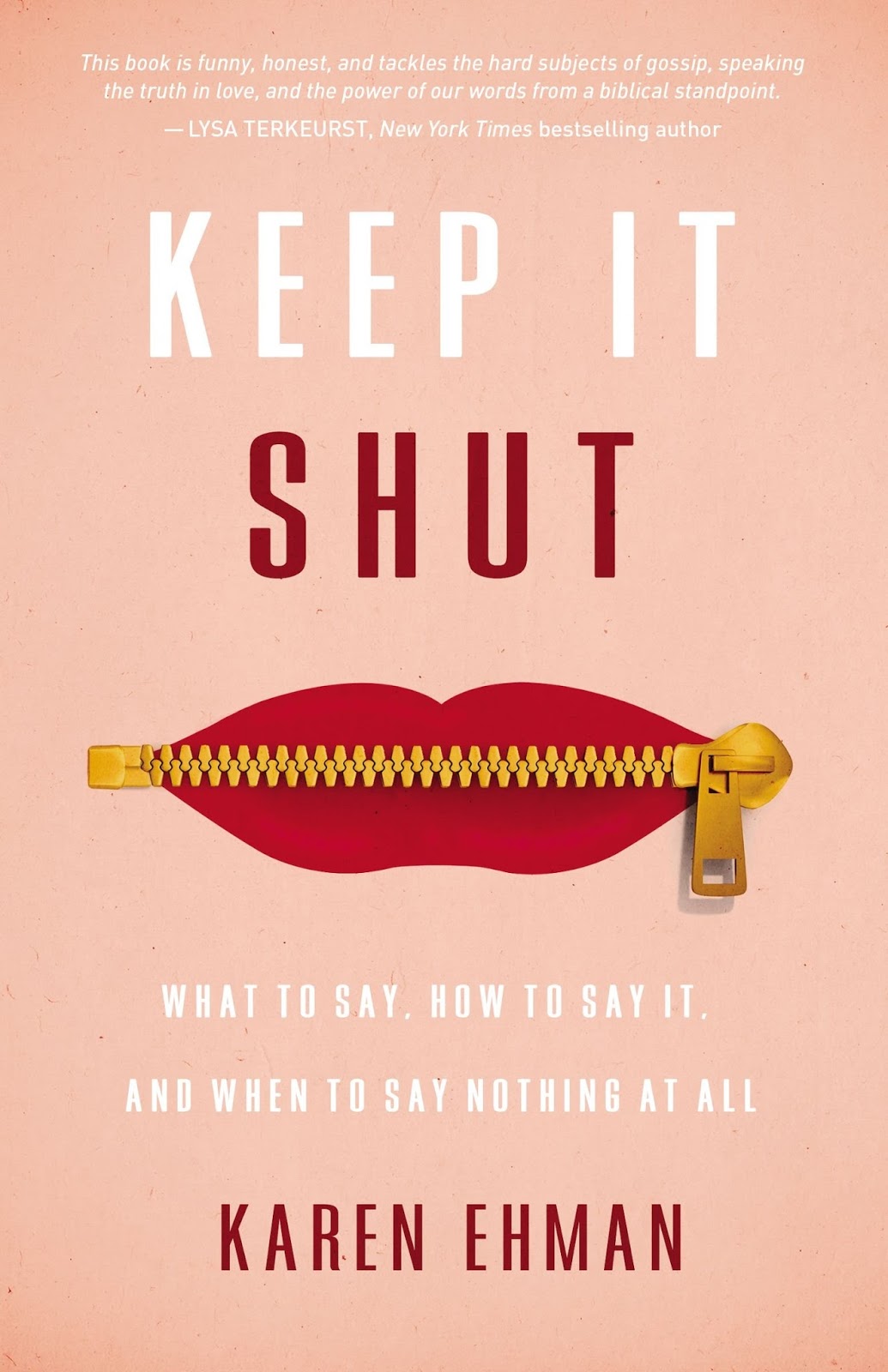
Karen Ehman: Keep It Shut: What to Say, How to Say It, and When to Say Nothing at All

A sensible, balanced look at using our words wisely. Many of the points and principles weren't exactly new to me, but served as a good reminder nevertheless. I also appreciated that Ehman's primary focus is not the mouth but the heart - examining the motives why we speak or don't speak - and that she writes candidly about her own struggles.


Jon Ronson: So You've Been Publicly Shamed

Ronson researches various kinds of public shame and humiliation and the way people have survived it - if they have survived it. He starts with a couple of cases where people have been humiliated on the social media. Since I don't use Twitter or Facebook (and don't live in North America), I had no idea of how far this can go and how much or little is needed to spark it.

As a look into the darker sides of social media and our modern culture, this book is fascinating and not a little frightening.


Rob Lilwall: Walking Home from Mongolia: ten million steps through China, from the Gobi Desert to the South China Sea

Lilwall is a Brit but his home is now in Hong Kong. Thus, walking home from Mongolia means walking through China. Lots of arduous effort, plenty of comical moments, some serious thoughts and a good dose of self-deprecating British humour. 


Griff Rhys Jones: Rivers: a voyage into the heart of Britain

Griff Rhys Jones made a TV series about British rivers and wrote a book about the experience. Apparently, the point of the series was to explore the history and the present day of the rivers as well as to entertain the audience by putting Jones into all kinds of difficult, risky and potentially funny situations in various means of transportation. Jones writes with a wry sense of humour and if you want to learn about history and geography, you'll get that, too.


Wednesday, 15 July 2015

Summer reading (July QuickLit)

Linking up with Modern Mrs Darcy's QuickLit to share short reviews of what we've been reading lately. 

Summer has been unusually cold and rainy around here. We've been alternating between work and holidays, home and travelling, and I've finally had time to read many of the books I have bought months ago and saved for later.

Most of the books I've read are non-fiction, but these stories are more compelling, exciting and engrossing than many novels I can think of. Seriously, it's hard to find novels that I'd enjoy as much as these... 

Ken Tada, Joni Eareckson Tada & Larry Libby: Joni & Ken. An Untold Love Story.

Most (at least Western?) Christians know who Joni Eareckson Tada is. Fewer, perhaps, know her husband. As Joni comments in the acknowledgements section of the book, most of the "untold" part of this love story is Ken's part - he has stayed in the background, while Joni has been a public figure, telling her story in books, talks, broadcasts, etc.

Joni's breast cancer story is a big part of the book. That overwhelming health challenge - on top of quadriplegia and chronic pains - actually brought Joni and Ken closer together, as Ken became more involved in Joni's health care than before. Strangely, the cancer 'gave' them more time together, better communication, more intimacy, and even stronger mutual trust and respect than earlier.

One of the book's messages is that a 'fairly good' marriage can become better - lots better. And that good relationships don't just happen - that it takes conscious effort from both to be open and to extend grace to one another.

As for the rest - read it for yourself, it's worth it :) A hopeful story.

Derek and Lydia Prince: Appointment in Jerusalem

Old "Christian classic" memoir that a friend recommended to me. 
Lydia Christensen, a well-to-do schoolteacher in Denmark, sought for life's meaning, encountered God in a dynamic way - and felt led to go to Jerusalem. There, she became a foster mother to a baby girl who was nearly dying, and she experienced a lot of challenges as well as miraculous answers to prayer. (The events in the book took place in the 1920's and 30's.)
A riveting story.


Eric Metaxas: Amazing Grace. William Wilberforce and the Heroic Campaign to End Slavery

William Wilberforce was a truly fascinating person. And Metaxas is a skillful writer: he tells Wilberforce's story in an entertaining way, with many enlivening details and witty commentary. He also gives enough background of the time period to help me understand how and why Wilberforce was significant and extraordinary (and in which things he was a more typical representative of his time).
An interesting story.


Kara Tippetts: The Hardest Peace: Expecting Grace in the Midst of Life's Hard

Kara's life story, focused on Jesus: how Kara found and met God's grace in many hardships. The most touching parts, for me, were her thoughts on how her cancer was impacting her children and how to talk with the kids about it. 

Honest and beautiful book.


I did read a bit of fiction, too:
Katherine Reay: Dear Mr Knightley
A modern retelling of Jean Webster's Daddy-Long-Legs. If you're familiar with that story (as I was), you'll probably enjoy noticing the parallels and picking up clues along the way. 
The character of the heroine, Sam, and certain plot twists required a bit of willing suspension of disbelief from me, and I didn't mind that. The novel was entertaining and engaging enough to keep me reading way past my normal bedtime.
(And of course I appreciated the literary quotations and allusions, especially the Austen ones...)

Wednesday, 13 May 2015

Young Women and War (May QuickLit)

Looks like I've been reading a lot about war lately... 
Linking up with Modern Mrs Darcy's QuickLit to share what we've been reading. Go there for lots of other book suggestions - not all about war.... :)


Judith Kerr: Out of the Hitler Time trilogy
  • When Hitler Stole Pink Rabbit
  • The Other Way Round
  • A Small Person Far Away

Autobiographical fiction.

If you want to hear a really delightful author interview, click through to the BBC Bookclub podcast: http://downloads.bbc.co.uk/podcasts/radio4/bc/bc_20150201-1635a.mp3. The interview is mainly about the first novel in the trilogy, When Hitler Stole Pink Rabbit. At 90+ years, Kerr is a bright, humorous and eloquent interviewee.

When Hitler Stole Pink Rabbit is a children's novel that adults, too, can enjoy.
Anna, based on Judith Kerr herself, is nine years old and her brother Max a couple of years older, when their family has to flee from Berlin. This is in 1933, when the Nazis win the election; their father, a famous author, has been criticizing the Nazis in public. The family lives first in Switzerland, then in Paris, and at the end of the novel they move to London. The story shows how the children adapt to the new places and generally feel fairly secure as long as the family is together. For the children, refugee life can be hard but it's also an adventure.

I'm definitely going to give this to my son to read when it's time to process this period in history and/or talk about the themes of immigration and refugees. (According to the BBC interview, this book is assigned reading in German schools - one way to deal with the history.)

In the second novel, The Other Way Round, Anna and her family live through the second world war in Britain, mostly in London. Anna, 16 at the start of the novel, struggles to get a job, survives the Blitz, has her first crush/love and discovers her talents. This one is no longer a children's book, but I'd happily give it to a teen who wants to read about wartime life in London and the special challenges of being a refugee in a country at war.

The third one, A Small Person Far Away, finds Anna in her early thirties, recently married, living in London, and with an exciting new job at the BBC. But a phone call summons her to her mother's bedside - to Berlin. In Berlin, Anna faces complicated family relationships, suppressed childhood memories, ominous-sounding news from Suez and Hungary, etc. I think that adults will be more interested in the themes of this one.
(Warning: if suicide themes are a trigger for you, skip this book.)

So, all in all: I liked this trilogy. I loved the first part, which I vaguely remember reading in my childhood. The vivid descriptions of wartime London were really well done.


Vera Brittain: Testament of Youth

Memoir.
A young woman grows up in a provincial town in Edwardian England. She struggles to get to study at Oxford. And when she gets there, WW1 begins. Her only brother, her fiancee, and their friends who become her friends, too: all are swallowed up by the conflict. She puts her studies on hold and volunteers to nurse.

At the end, she is the sole survivor of the group. The war stole her youth and killed her friends, and her wartime experiences set her apart from all others when she goes back to Oxford to continue her studies. In a way, she has to build a completely new life for herself.

This book is partly Brittain's tribute to the young men who died, a way of keeping their memory alive. It also gives the perspective of women at war - a somewhat neglected perspective at the time, if I understand correctly. 
It's not an easy book to read - naturally, considering the subject matter. (And the length... 608 pages in this edition.) I am saddened by the way the war made Brittain into an agnostic/atheist, though I can understand her thought processes. Some parts sound especially poignant, considering that this was originally published in 1933, and a new worldwide conflict was just a few years ahead.

Friday, 17 April 2015

QuickLit in April


Wilkerson, Gwen: Abiding in His Strength

I've been reading several Wilkerson books lately. The first was Gary Wilkerson's biography of his dad David Wilkerson, and he also mentioned his mother Gwen Wilkerson's memoirs in the book. So I thought I'd really like to get her point of view, too.

Funny story: I got the book as a Finnish translation from the library. My 10-year-old saw it on my library bookshelf, then took me to the living room and showed me exactly the same book - the one that we own. My son knows our bookcases better than I do?

As for the book, excellent. She tells of her struggles candidly. Marital problems, Gwen's cancers (four times!) and the cancers of both her daughters. And through it all - Jesus.


Davis, Katie: Kisses from Katie

Katie's life has become very different from the usual path taken by her peers. After she graduated from high school, she went to Uganda to work with children. Now she's the adoptive/foster mother of 13 girls and they're serving the people around them as a family. Her ministry helps to sponsor poor children so they can go to school, get enough food, and have their medical needs taken care of.

Katie's youth and enthusiasm come through very clearly in this book. And her enthusiasm is catching. When one ordinary person says Yes to God's will, amazing things can happen. It isn't easy - Katie also tells honestly about the hardships and challenges - but it's worthwhile. God has given her a lot of love for the people around her.

My only problem with this book is that it occasionally feels a little repetitive - but it's still very much worth reading.


Bates, Laura: Shakespeare Saved My Life

How can reading Shakespeare save the life of a convicted killer?
Literature is powerful when you let it make you think.
And this one is definitely a thought-provoking read.

(I have to admit, I never got as much out of Shakespeare as the prisoners do in this book.)

This book was Overdrive's Big Library Read. I never participated in the discussion on that website, but they have good discussion questions if you want to use this in a book club. It would work pretty for that purpose, I think - lots to discuss. (But you might get a lively political debate on the U.S. prison system, too.)


Doerr, Anthony: All the Light We Cannot See

I don't have the words to review this book. And seeing how long it's been on the bestseller lists, I suppose many have already read it. :)

It's a great novel. An interesting perspective on WW2. Fascinating characters. Beautiful language. If any one of those sounds interesting to you, go read this book. :)

Sunday, 15 March 2015

QuickLit for March


Marilynne Robinson: Housekeeping

This novel begins with a train wreck and continues with transience, decay, and death.
I cannot think of a better way to describe what Robinson does with language than this phrase from The New Yorker's review, as quoted on the book's flyleaf: "the tense precision of good poetry."

And yet I wonder - if I had read this novel before reading anything else by Marilynne Robinson, would its depressing themes have discouraged me from trying Gilead and the rest of her books, no matter how much I love what she does with language?


Louise Penny: Still Life

This is the first book in a mystery series set in Quebec and featuring Chief Inspector Armand Gamache, a very sympathetic crime investigator, and lots of other vivid characters I'd like to get to know better. Too bad that one of the most interesting characters is the one whose death Gamache is investigating here, so I'm pretty sure she won't make an appearance in the later parts of the series.

On the whole, this is a pretty enjoyable traditional detective novel. Not exactly "a cosy mystery" despite the people and setting, but not too gory or gloomy either. If you are wondering whether this series might be your cup of tea, go to Louise Penny's author website and read the excerpt - it's a good sample.  


Micha Boyett: Found. A Story of Questions, Grace & Everyday Prayer

A mother of a toddler feels she has lost the prayer life and the relationship with God she used to have. She looks for help and inspiration in the writings of St Benedict and the practices of Benedictine monks.

Reading this was a bit like going on a journey with Micha as she discovers grace, even and especially when she doesn't find simple clear-cut answers to her questions. I identify a lot with her tendency to try to earn the love and approval of God. And yet, that's not at all what life is about, and I think I'll go back to this book some day to remind myself of that.


Gary Wilkerson: David Wilkerson. The Cross, the Switchblade and the Man Who Believed.

A son writes his famous father's biography, and does it well. The book gives a complex portrait of David Wilkerson: both the victories and the struggles, weaknesses and strengths. Family, friends, and coworkers give their views. And what a story it all makes. This is no hagiography, but it's a testimony of what God has done.


William Zinsser: On Writing Well. The Classic Guide to Writing Nonfiction (30th anniversary edition)

Apparently Zinsser knows what he is doing as a writer, because I really enjoy reading this writing guide. Essential reading for people who want to write nonfiction.


Tuesday, 16 December 2014

What I've been reading - the Fiction Edition

Modern Mrs Darcy's Twitterature link-up is now called Quick Lit. Go there to get more - lots more - recommendations and short reviews of books.

Oddly, after so many Twitteratures of mostly non-fiction, this time all I have is fiction...

Marilynne Robinson: Lila

Neglected child, cared for by a migrant worker woman, grows into a woman who feels she's an outsider everywhere. How does she become an old pastor's wife in the small Iowa town called Gilead? Will she find her identity, and a way to feel at home?
Now this was a good book, and I tried to enjoy it slowly. Lots of food for thought. And now that I have some inkling of what Lila might be thinking and feeling, I want to re-read Gilead, too.


Fyodor Dostoyevsky: The Idiot

A naive man enters society in St. Petersburg (in the late 1800s, I assume). He's so trusting, open and candid that he's quite a puzzle to everyone he meets.
The book is a witty social commentary mixed up with emotional instability, downright madness and volatile, self-destructively impulsive people - well, there are many sorts among the large cast of characters, but the impulsiveness made the biggest impression on me.
 I read this because it was chosen for an online book club, and many people in the online book club have enjoyed it. I wasn't thrilled with it, but having started, I persevered.
And I just have to give kudos to the Finnish translation by Olli Kuukasjärvi. So good!


Earlier this autumn, as I was dragged down with a persistent cold and cough, I went on a comfort reading binge of my favourite detective novels.
First, a bunch of my favourite Dorothy L.Sayers books:
The Nine Tailors
Murder Must Advertise
Gaudy Night
I love these more for their settings - the Fens, a 1930's advertising agency and a fictitious women's college at Oxford respectively - than their plots.
(I have a feeling I could say this for all the detective novels I love. Because I love them as novels, not as detective stories.)
Though I like Sayers's detective, Lord Peter Wimsey, a lot, I enjoy the other characters at least as much. The inimitable Bunter. The entire village of Fenchurch St. Paul, especially their enthusiastic vicar. The colourful bunch of people working at the advertising agency. The dons and students at Oxford. Gaudy Night is mostly Harriet Vane's story and POV, and that makes this book special, too.

And, lastly, a book that I have read many times before, too:

Josephine Tey: The Daughter of Time

A bedridden police inspector and his "looker-upper" aka research assistant investigate the case of Richard III's nephews. Was Richard III really the monster that popular history had painted him through the centuries? What really happened to the young Princes?

I don't have the words to express how relevant this story is in our time, when the Internet and social media have opened up the way for anyone and everyone to write their own version of history. What is reliable? How is it possible to evaluate how people's perspectives, sympathies and wishes influence the way they tell a story?