Showing posts with label linkup. Show all posts

Thursday, 3 March 2016

So much to read (and so little time)


Around the end of December, I got into a reading/writing slump. I've managed to read a few books since January, but I haven't had the time and energy to write about them.
I'm beginning to recover, though. At least I'm getting back into reading, as evidenced by this huge (for me) pile of books I've added to my TBR stack within the last month.

Library books:
W.G. Sebald: Saturnuksen renkaat

Originally written in German (Die Ringe des Saturn: Eine englische Wallfahrt) and published in English as The Rings of Saturn. I didn't know anything about this book but saw the keywords 'Britain,' 'walking,' and 'travel,' and so borrowed this on a whim. Looks like it's more literary/highbrow than the travel books I typically read, but I'll see how I like it when I get to it.

Daniel Coyle: The Talent Code

A re-read, because I want to remind myself of the principles of deep practice.

John Gottman: Sju gyllene regler för en lycklig kärleksrelation

This is The Seven Principles for Making Marriage Work in Swedish, because my library only had this version of it. I'm interested in getting the information and the principles from this book, but it's rather heavy going in Swedish. I can read Swedish almost fluently, but one part of my brain is trying to re-translate the text into English or at least guess what the original says, while another part is trying to process the information into my mother tongue so that I could apply it to my life and marriage. And I constantly feel like I'm missing something...
Should I persevere with this or switch to the same author's 10 Lessons to Transform Your Marriage, which is available in the library as a Finnish translation?

Timothy Keller: Kuninkaan risti

Finnish translation of King's Cross. I got this because I really liked The Prodigal God by the same author; it was one of the few books I managed to read during my January reading slump.

Christopher McDougall: Natural born heroes: the lost secrets of strength and endurance
* ebook borrowed from the library

I rather enjoyed McDougall's Born to Run, even if I didn't buy into it wholesale. (I don't eat chia seeds daily and I definitely don't run ultra distances...) That's why I picked this ebook when it happened to be available in the library system and I was looking for something to read.

I'm only about halfway through so far, so I'm not giving a final verdict yet, but I'll say it's not as easy to get into as Born to Run. It seems a mishmash of WW2 history and ancient history (in Crete/Greece), human potential for endurance and heroism, plus a bunch of other stories, and I'm still looking for the thread that will bind everything together.

Kindle purchases:

I also went a little bit crazy with Kindle daily/monthly deals (all of these books were between $1 and $5 when I bought them). I'm certainly not going read all these in March, but some day...

Vicki Courtney: 5 Conversations You Must Have with Your Son

I have a son who'll be turning 11 soon. I have a fairly good idea of what I want to discuss with him as he's growing up, but this book looks like a good reminder of certain essentials.


Doris Pilkington: Follow the Rabbit-Proof Fence

Sounds like an interesting story.

Anita Dittman: Trapped in Hitler's Hell: A Young Jewish Girl Discovers the Messiah's Faithfulness in the Midst of the Holocaust

Another story that sounds interesting :)


Michael P. V. Barrett: Beginning at Moses: A Guide to Finding Christ in the Old Testament

I want to find out more about this topic.


Helen Bryan: The War Brides

Some fiction for a change - having read a bit of the sample, I wanted to read more.


Carolyn Weber: Surprised by Oxford: A Memoir

Spiritual discovery and Oxford. With those keywords, this ought to be my cup of tea :)


Saturday, 17 October 2015

Recent Good Reads, October

I was suprised how many good books I've read since the previous Quick Lit.

Linking up with Modern Mrs Darcy - the monthly link-up for short reviews.

Caroline Moorehead: Village of Secrets. Defying the Nazis in Vichy France

Moorehead has written a thoroughly researched and apparently fairly balanced account of what happened on the plateau Vivarais-Lignon during World War II. It's a remarkable story - many outstanding individuals but also just many 'unnamed', quiet people in the background, all working more or less together to save and protect Jews.

This is an intensive read. Not just the subject matter - it's also hard to keep up with all the people and the parallel storylines in the book. Lessons on the power of faith and the power of a community acting together are on offer. And a lot to ponder: "What would I do if facing choices like this?" (Just the thought of having to send my 10-year-old away to be cared for by strangers, because that was the only way to save his life... shudder.)

Apparently, many people who only want to see a part of the story haven't liked the way Moorehead presents various, even conflicting viewpoints. Here's a piece by the author about it.


Chris Hadfield: An Astronaut's Guide to Life on Earth

Col. Chris Hadfield was the first Canadian astronaut to walk in space and command the International Space Station. But those are just a couple of highlights, and most of his life has been on Earth. In this memoir, Hadfield is also trying to explain what it takes to become an astronaut (a lot) and how to think like an astronaut. 

I really enjoyed this and would recommend this without hesitation to anyone who has even the slightest interest in space exploration. Or to teens who are trying to sort out possible career choices (even if their dreams have nothing to do with space exploration), because most of the principles in Hadfield's "thinking like an astronaut" are very applicable to life on Earth, whatever you do. 

Hanspeter Nüesch: Ruth and Billy Graham: The Legacy of a Couple

This is not a biography as such - the book is organised around topics, not chronologically. There are plenty of anecdotes, photos and quotes; Nüesch has done a thorough job of interviewing people and going through books, newspaper and magazine articles, Billy's and Ruth's speeches and writings, etc.

If you want to know what Ruth and Billy Graham thought about various issues, how they came to think the way they did, and how their principles and convictions played out in practice, this is a good book to read. I enjoyed getting some insight into how the Grahams' marriage and family life worked.

I also felt that the book was not trying to put its subjects on a pedestal. Just the opposite: the emphasis was on God's grace and mercy, which the Grahams knew they themselves needed every day, all the time. And that made this book even more inspirational. Glory to God, not to the people.


Gretchen Rubin: Better Than Before - Mastering the Habits of Our Everyday Lives

I wasn't quite as impressed with this book as I expected to be. Maybe it's just the timing - I'm not feeling particularly keen to analyse and improve my everyday habits, even though I realize there's room for improvement.

The positives: I like Rubin's style of writing, very readable, and it's nice that she keeps giving personal examples from her own life and the lives of people around her.

In the end, though, I'm left with the hard work of thinking how this all could be applied to my real life, and right now, it's easier to close the book, return it to the library and leave it at that. Maybe I'll put this down on the list of "books to read when I feel energetic enough to actually apply them"?


Diana Webster: Finland Forevermore. Helsinki 1953-1963.

This is a memoir of Diana Webster's first decade teaching at the English Department of Helsinki University. More than the university, though, it's about life in Finland at the time, as experienced by an expatriate Brit. She also tells how she started working on radio and television productions alongside her teaching career.

I found this both very interesting and also very funny. Oh how much life has changed in the decades after this period, both at the university and in the Finnish society overall.

Of course for me there's the personal angle of remembering Mrs Webster fondly from my university days (she was still teaching there in the early 1990's) but I'm sure that other readers will appreciate this memoir, too, even if they've never heard about her or met her. I can also recommend her memoir of her first year in Finland, Finland Forever, as well as the book she wrote with her daughter Victoria, called So Many Everests.


A collection of 13 short stories by 13 different authors. All stories are about strong girls or women and real historical events. The website says this was "intended for readers of 9+ years."

It was OK; I liked some stories much better than some others but mostly enjoyed them all.

A side note, if you're thinking of giving this to a young reader: In many stories, people die. Even sympathetic characters. That's real history, of course, but still, I don't know how well I would have handled that as a sensitive 9-year-old (for me, this would have been much better at 12+). Just be aware; you'll know your young reader best.

Wednesday, 16 September 2015

September QuickLit - some recent reads


Päivi Laitinen: Pieni pyörä preerialla (A Little Bike on the Prairie)

For those readers who aren't fluent in Finnish: I'm so sorry this book is not likely to become available in English. :)

At the time Päivi Laitinen cycled across the USA on the TransAmerica Trail route by Adventure Cycling Association, she was a 48-year-old journalist taking a leave of absence from a Finnish small-town newspaper. Even though the book looks a bit "self-published" visually, the text shows that she's a professional writer. She gives the essential flavours of the places she visits, some local background history/stories, some significant details, and it's like you'd seen it yourself. (And she also has the professional writer's knack for leaving things out so that reader doesn't get too tired.) Such a fun book.

And as she cycled the flat straight roads of Kansas, she had plenty of time to think how to put her experience into one sentence. And this is what she came up with (my translation): "USA is a big and hot place with horses, nice people - and all too many hills!"


Joseph Loconte: A Hobbit, a Wardrobe and a Great War. How J.R.R. Tolkien and C.S. Lewis rediscovered faith, friendship, and heroism in the cataclysm of 1914-1918


Mostly, I picked the book based on the cover and the title. And those made me want to learn more about how J.R.R. Tolkien's and C.S. Lewis's experiences of WW1 influenced their views and writing. However, I was a little disappointed, feeling that I didn't learn much new. (If you have read quite a bit about WW1 and if you have read Tolkien's and/or Lewis's biographies, be forewarned.) I'm not saying it's not a good read, but maybe I'm not enough of a Tolkien/Lewis fan to 'love' this book.

So, Tolkien kept his Christian faith despite the war making many of his generation more cynical. C.S. Lewis actually became a Christian much later, and you can't say the war made him lose his faith nor to rediscover it. What they "gained" from the war was knowing the kind of fellowship that develops between people who fight together, and those deep friendships are a big part of their stories. The author also points out that they didn't lose the hope that there are things worth fighting for, though war and fighting is not glorified in their fiction. The gritty and gruesome realities of war are more subdued and hinted at in Lewis's Narnia (after all it's written for children) and more horribly realistic in Tolkien's Lord of the Rings. Their heroes don't enjoy fighting, but they get on with what has to be done.


Joni Eareckson Tada: A Place of Healing: Wrestling with the Mysteries of Suffering, Pain, and God's Sovereignty

I haven't quite finished this one yet, as I'm savouring it slowly. If anyone, Joni Eareckson Tada is well qualified to write about this topic. It's not just the decades of quadriplegia, but also the more intense chronic pain that she has suffered (apparently this book was written before she had the breast cancer, too, because she doesn't mention it).

With all her personal experiences of suffering, she's definitely been asking lots of questions and also looking for answers in Scripture. None of her conclusions are drawn lightly or superficially. I love the way this book makes me think and points me towards God.

This is her conclusion about healing: God reserves the right to heal or not... as He sees fit.

Definitely, if you want to read a good book on the issues of suffering, faith etc., put this book on your reading list, now. :)

Sunday, 16 August 2015

Selected summer reading (August QuickLit)

Linking up with Modern Mrs Darcy to share our recent reads.


Jacqueline Woodson: Brown Girl Dreaming

Life story in poems. Jacqueline Woodson writes about her family, about living as a child in South Carolina and then in New York, about being different (not just racial issues but also being raised as a Jehovah's Witness), and about finding her voice as a storyteller and writer.

So good to see the world from someone else's point of view.

Here's a little quote from one poem. It's about her finding a picture book at the library, "the picture book filled with brown people, more brown people than I'd ever seen in a book before."

If someone had taken
that book out of my hand
said, You're too old for this
maybe
I'd never have believed
that someone who looked like me
could be in the pages of the book
that someone who looked like me
had a story.


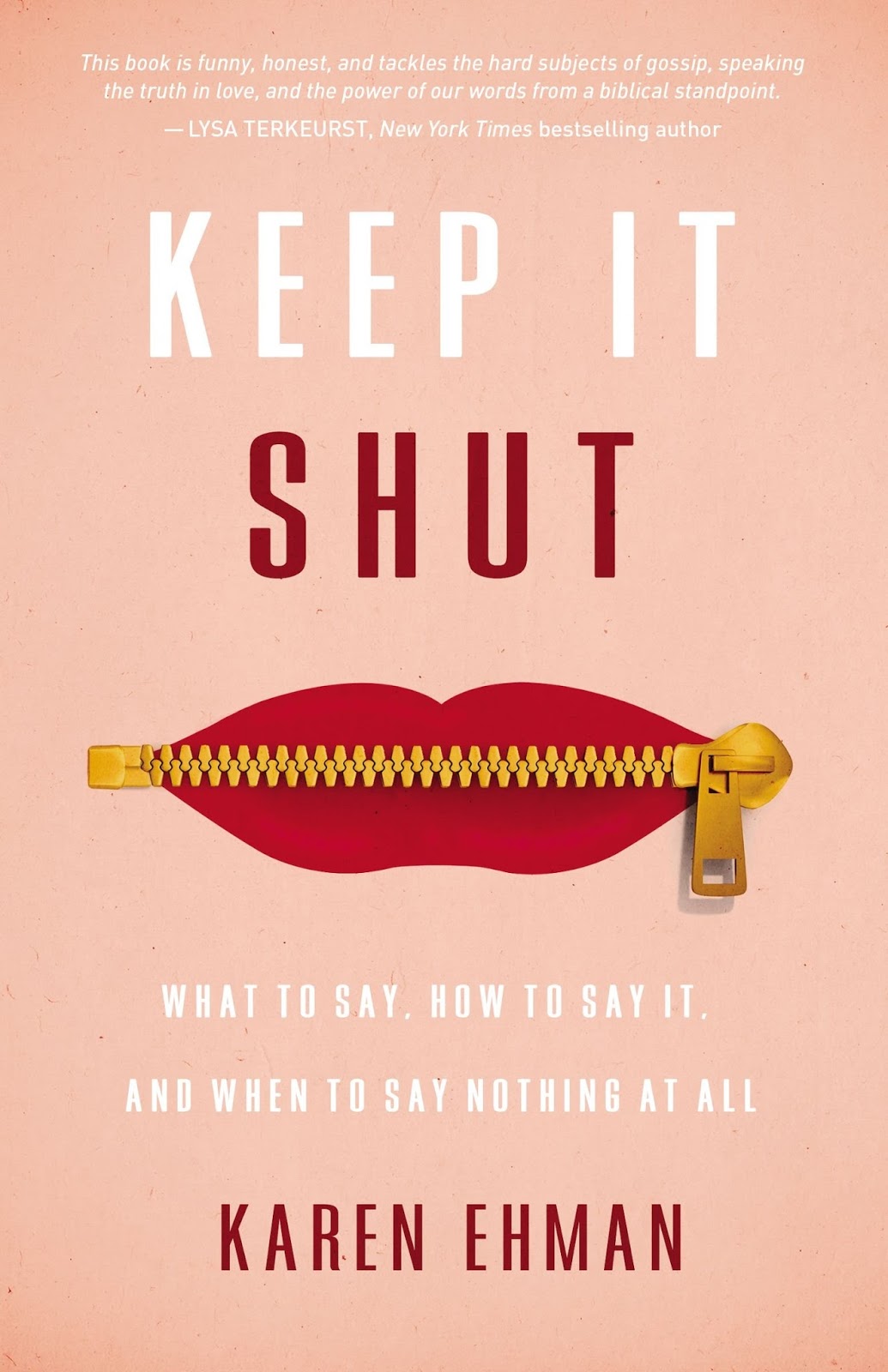
Karen Ehman: Keep It Shut: What to Say, How to Say It, and When to Say Nothing at All

A sensible, balanced look at using our words wisely. Many of the points and principles weren't exactly new to me, but served as a good reminder nevertheless. I also appreciated that Ehman's primary focus is not the mouth but the heart - examining the motives why we speak or don't speak - and that she writes candidly about her own struggles.


Jon Ronson: So You've Been Publicly Shamed

Ronson researches various kinds of public shame and humiliation and the way people have survived it - if they have survived it. He starts with a couple of cases where people have been humiliated on the social media. Since I don't use Twitter or Facebook (and don't live in North America), I had no idea of how far this can go and how much or little is needed to spark it.

As a look into the darker sides of social media and our modern culture, this book is fascinating and not a little frightening.


Rob Lilwall: Walking Home from Mongolia: ten million steps through China, from the Gobi Desert to the South China Sea

Lilwall is a Brit but his home is now in Hong Kong. Thus, walking home from Mongolia means walking through China. Lots of arduous effort, plenty of comical moments, some serious thoughts and a good dose of self-deprecating British humour. 


Griff Rhys Jones: Rivers: a voyage into the heart of Britain

Griff Rhys Jones made a TV series about British rivers and wrote a book about the experience. Apparently, the point of the series was to explore the history and the present day of the rivers as well as to entertain the audience by putting Jones into all kinds of difficult, risky and potentially funny situations in various means of transportation. Jones writes with a wry sense of humour and if you want to learn about history and geography, you'll get that, too.


Monday, 3 August 2015

New on the Stack in July

June was all about reading the books I had been 'saving for later' earlier in the year, but in July I went to the other extreme...

Linking up with Sheila at the Deliberate Reader.

Travel books galore

I got a lot of travel books, all for pretty much the same reason: they looked interesting, and reading a good travel book is a bit like taking a trip yourself.

Christopher Somerville: The golden step: a walk through the heart of Crete

Somerville is a travel writer, but this time he went to Crete to travel for pleasure, not for work. (It was sort of a 50th birthday gift from his wife.) It is apparent that he knows the country pretty well from previous visits, but on this walking trip, he also finds places and experiences that are new to him.

Rob Lilwall: Walking Home from Mongolia: ten million steps through China, from the Gobi Desert to the South China Sea

I enjoyed Lilwall's earlier book (Cycling Home from Siberia). This sounded just as promising. I like his blend of British humour, funny adventures and heart-searching.

Walking through China is something I am not likely to attempt myself, ever - so I'm glad I can read about someone else taking on the adventure.


  Griff Rhys Jones: Rivers: a voyage into the heart of Britain

Griff Rhys Jones writes about making a TV series on British rivers. 
(I haven't seen the series, but the book makes it sound pretty interesting.)

A mixture of history, geography, adventures with various means of transportation etc., humour, personal reminiscences... And a dog named Cadbury. :) (A chocolate Labrador. Of course.)


Not just travel - expatriate experiences

All borrowed from the library.
Why: As with travel books, I find it interesting to learn more about other countries through someone's personal experiences.

 Mailis Hudilainen: Minu Peterburi
 Ede Schank Tamkivi: Minu California

Two books from the same series: Estonian expats write about their experiences in a particular place. These ones are about St Petersburg and California. (I've never been to California, and the last time I was in St Petersburg, it was still called Leningrad...)

 
Saara Ojanen: Mekongin mutkassa (Along the Mekong river)

A Finnish NGO worker's experiences in Cambodia, from the 1980's to the present days. I know very little about Cambodia, and hope to learn more from this book.

Other library finds


 Susan Cain: Quiet: the power of introverts in a world that can't stop talking

Why: I'm an introvert, and I was interested in this book after reading many recommendations. My thoughts on the book here.

Jacqueline Woodson: Brown Girl Dreaming

Why: This caught my eye in the new titles list at the library website, probably because I've read some very positive reviews on it. (Moreover, I was glad to find a poetry book for the reading challenges - this is "a genre I don't typically read.")


Kindle purchases
I snapped up a couple of special offers:

Rachel Friedman: The Good Girl's Guide to Getting Lost: A Memoir of Three Continents, Two Friends, and One Unexpected Adventure

Why: Sounded intriguing. (See other travel and expat books...)

Karen Ehman: Keep It Shut: What to Say, How to Say It, and When to Say Nothing at All

Why: I listened to an interview with Karen Ehman about choosing our words wisely on the Focus on the Family Daily podcast during our holiday trip. (Talk about good timing...) 
I know this is a topic I really need to think about more. 

Joni Eareckson Tada: A Place of Healing: Wrestling with the Mysteries of Suffering, Pain, and God's Sovereignty

Why: I'm sure that what Joni Eareckson Tada has to say on this topic is worth reading.

Wednesday, 3 June 2015

New on the Stack, May Additions


In May, we shopped for some graduation presents from the CLC web shop and ended up buying a couple of books for ourselves, too. Does that ever happen to you?

Ken Tada, Joni Eareckson Tada & Larry Libby: Joni & Ken. An Untold Love Story.
Why: I wanted to read this, and I have an inkling it'll be one of those books I want to own so I can lend it out to friends and re-read. (I've enjoyed all the earlier books by Joni Eareckson Tada that I've read.)

 Eric Metaxas: Amazing Grace
Why: After reading Metaxas's biography of Dietrich Bonhoeffer, we know Metaxas is a good writer and we expect this to be a well-researched, insightful biography, too. Plus we're interested in learning more about William Wilberforce.

(I haven't started these yet - saving up for the summer holidays.)

Oh, but I mustn't forget:

How: Audio e-book, library loan
Why: I wanted an audio book for a long journey. (Unfortunately, motion sickness prevents me from reading on cars and buses, so I can't take advantage of travel time even if I'm not driving.)
Because I really like Gary Chapman's podcasts (Moody Radio: Building Relationships), I thought this would be an interesting book as well as a useful one. And yes, it is - at least as far as I've listened. I may have to buy it in print one day, as I don't have enough time to listen to it all the way through, now that the trip is over. It's yet another one of those books that I might want to re-read occasionally to remind myself of putting the good ideas in practice.

Friday, 17 April 2015

QuickLit in April


Wilkerson, Gwen: Abiding in His Strength

I've been reading several Wilkerson books lately. The first was Gary Wilkerson's biography of his dad David Wilkerson, and he also mentioned his mother Gwen Wilkerson's memoirs in the book. So I thought I'd really like to get her point of view, too.

Funny story: I got the book as a Finnish translation from the library. My 10-year-old saw it on my library bookshelf, then took me to the living room and showed me exactly the same book - the one that we own. My son knows our bookcases better than I do?

As for the book, excellent. She tells of her struggles candidly. Marital problems, Gwen's cancers (four times!) and the cancers of both her daughters. And through it all - Jesus.


Davis, Katie: Kisses from Katie

Katie's life has become very different from the usual path taken by her peers. After she graduated from high school, she went to Uganda to work with children. Now she's the adoptive/foster mother of 13 girls and they're serving the people around them as a family. Her ministry helps to sponsor poor children so they can go to school, get enough food, and have their medical needs taken care of.

Katie's youth and enthusiasm come through very clearly in this book. And her enthusiasm is catching. When one ordinary person says Yes to God's will, amazing things can happen. It isn't easy - Katie also tells honestly about the hardships and challenges - but it's worthwhile. God has given her a lot of love for the people around her.

My only problem with this book is that it occasionally feels a little repetitive - but it's still very much worth reading.


Bates, Laura: Shakespeare Saved My Life

How can reading Shakespeare save the life of a convicted killer?
Literature is powerful when you let it make you think.
And this one is definitely a thought-provoking read.

(I have to admit, I never got as much out of Shakespeare as the prisoners do in this book.)

This book was Overdrive's Big Library Read. I never participated in the discussion on that website, but they have good discussion questions if you want to use this in a book club. It would work pretty for that purpose, I think - lots to discuss. (But you might get a lively political debate on the U.S. prison system, too.)


Doerr, Anthony: All the Light We Cannot See

I don't have the words to review this book. And seeing how long it's been on the bestseller lists, I suppose many have already read it. :)

It's a great novel. An interesting perspective on WW2. Fascinating characters. Beautiful language. If any one of those sounds interesting to you, go read this book. :)

Friday, 3 April 2015

New on the Stack in March

Time to link up with the Deliberate Reader and see what we have added to our reading stacks in the past month!

My stack of printed books looks like this:


Wilkerson, Gary: David Wilkerson. The Cross, the Switchblade and the Man Who Believed

Why: A gift from my husband. (We apparently have a similar gift-giving strategy - choosing books that interest us both. :) ) I've already read this; here are some thoughts on it.


Davis, Katie: Kisses from Katie

Why: I noticed it on the library's list of new titles, because Amazon keeps recommending this to me based on the books I have bought/looked at. I've read mixed reviews - some enthusiastic, some not quite so keen - and I thought I'd give it a try.


Doerr, Anthony: All the Light We Cannot See

Why: All the reviews I've read about this book have been positive. 
Moreover, this will be my "bestseller" for the MMD Reading Challenge.*sigh of relief*
(I'm now in the middle of reading it, and it's number 3 on the NY Times Bestseller list, in the category of Combined print and e-book fiction. I really read very few books that are still "currently on the bestseller list" when I read them, because getting them from the library tends to mean getting them after the biggest wave of popularity has already passed.)


Borrowed electronically from the library:


Bates, Laura: Shakespeare Saved My Life. Ten Years in the Solitary with the Bard.

Why: It caught my attention when our library's Overdrive page advertised it as a Big Library Read book (http://biglibraryread.com/). The description intrigued me - I wanted to know how reading Shakespeare saved the life of a prison inmate. 
I probably won't participate in the discussion on the Big Library Read website, but it's an interesting concept.


Kindle Purchase:


Why: It was a special offer (just $3,71 with taxes), and I've read enough blog posts, about her and by her, to feel that this book will be worth reading. 


Sunday, 15 March 2015

QuickLit for March


Marilynne Robinson: Housekeeping

This novel begins with a train wreck and continues with transience, decay, and death.
I cannot think of a better way to describe what Robinson does with language than this phrase from The New Yorker's review, as quoted on the book's flyleaf: "the tense precision of good poetry."

And yet I wonder - if I had read this novel before reading anything else by Marilynne Robinson, would its depressing themes have discouraged me from trying Gilead and the rest of her books, no matter how much I love what she does with language?


Louise Penny: Still Life

This is the first book in a mystery series set in Quebec and featuring Chief Inspector Armand Gamache, a very sympathetic crime investigator, and lots of other vivid characters I'd like to get to know better. Too bad that one of the most interesting characters is the one whose death Gamache is investigating here, so I'm pretty sure she won't make an appearance in the later parts of the series.

On the whole, this is a pretty enjoyable traditional detective novel. Not exactly "a cosy mystery" despite the people and setting, but not too gory or gloomy either. If you are wondering whether this series might be your cup of tea, go to Louise Penny's author website and read the excerpt - it's a good sample.  


Micha Boyett: Found. A Story of Questions, Grace & Everyday Prayer

A mother of a toddler feels she has lost the prayer life and the relationship with God she used to have. She looks for help and inspiration in the writings of St Benedict and the practices of Benedictine monks.

Reading this was a bit like going on a journey with Micha as she discovers grace, even and especially when she doesn't find simple clear-cut answers to her questions. I identify a lot with her tendency to try to earn the love and approval of God. And yet, that's not at all what life is about, and I think I'll go back to this book some day to remind myself of that.


Gary Wilkerson: David Wilkerson. The Cross, the Switchblade and the Man Who Believed.

A son writes his famous father's biography, and does it well. The book gives a complex portrait of David Wilkerson: both the victories and the struggles, weaknesses and strengths. Family, friends, and coworkers give their views. And what a story it all makes. This is no hagiography, but it's a testimony of what God has done.


William Zinsser: On Writing Well. The Classic Guide to Writing Nonfiction (30th anniversary edition)

Apparently Zinsser knows what he is doing as a writer, because I really enjoy reading this writing guide. Essential reading for people who want to write nonfiction.


Tuesday, 3 March 2015

New on the Stack in February

Linking up with the Deliberate Reader for a look at our new additions.

So this is what happens when most of my library requests become available at the same time. I become so busy reading that I don't have time for blogging about books.
That pretty much sums up my February.


Temple, Rob: Very British Problems. Making Life Awkward for Ourselves, One Rainy Day at a Time.

Why: Saw it on the list of new titles at the library and thought it sounded interesting. What I didn't realize was that this is practically a collection of tweets. Not bad, though. Good for those "I want something to read that I can put down quickly" moments.

Louise Penny: Still Life

Why: I've read good reviews of this detective series and thought I'd give it a try. The Quebec setting was an extra incentive, as I haven't read too many books set in Quebec. (Actually, can't think of any off the top of my head.)

Anne Lamott: Bird by Bird

Why: Many positive reviews from people who love to write.
(However, as I wrote in my challenge update post, I'm not raving about this, though it was good. It's just that I'm not an aspiring writer of fiction.)

Marilynne Robinson: Housekeeping

Why: After Gilead, Home and Lila, I wanted to read Robinson's first novel, too.
My thoughts at this point (40 pages in):
- I know Robinson didn't read Lamott's Bird by Bird before writing this, but somehow the characters seem to be written in the way Lamott suggests to write them.
- I can sort of understand why many people have loved this, but I'm not fully convinced yet.
- If this had been the first book by Marilynne Robinson I read, would I have given Gilead a chance?

Alexander McCall Smith: Emma

Why: Because I am a Jane Austen fan, I've enjoyed other books by Alexander McCall Smith, and this fit nicely with the HelMet reading challenge.
(But really, why do I read modernizations of Austen's works, when I love the originals so much that nothing will ever compare? :) )

Heilika Pikkov: Minu Jeruusalemm (My Jerusalem)

Why: I've liked many other titles in this Estonian series. They're all written by people who live or have lived as expats in the country/city they write about, and the point is to give a personal perspective - their own experiences, not a tourist guide.

This writer is a young woman who lived in a convent in East Jerusalem to make a documentary film about one of the nuns. Sounded interesting to me - Jerusalem is a fascinating place, and I don't mind getting a glimpse of how documentaries are made.
(I read Estonian fairly fluently, though I probably miss a lot of nuances. One reason for me to read this series is to keep up my Estonian.)


And my only Kindle purchase was:

Katherine Reay: Lizzy and Jane

Why: It was a special offer ($0,99) and commended on Modern Mrs Darcy, so I thought I'd snap it up. See McCall Smith's Emma for other reasons... I might save this one for the summer, though.


Wednesday, 15 October 2014

Recent Reads (October Twitterature)

I love the concept of short book reviews in Modern Mrs Darcy's Twitterature linkup. I just cannot make the reviews tweet-length. 
But here goes October Twitterature, anyway. And for more short reviews, please visit Modern Mrs Darcy!


Hill, Susan: Howard's End Is On The Landing. A Year Of Reading From Home.

One day, Susan Hill was looking for a book in her home, realized what a lot of books they owned, and made a resolution that, for one year, she'd only read books she already owned.

She's not suggesting that anyone else do this, by the way, and it's not one of those "simplify your life" projects. For her, it was more of a journey into her own life, as she writes: "to explore what I had accumulated over a lifetime of reading."

In this book, then, Susan Hill gives us glimpses of her reading history, her literary likes and dislikes, her book-related memories, stories of her meeting other authors, etc. Some of her likes coincide with mine. Some don't. (Say what - she doesn't 'get' Jane Austen?) Her opinions and stories were fascinating to read, nevertheless. And isn't the cover just beautiful?

A book which is left on a shelf is a dead thing but it is also a chrysalis, an inanimate object packed with the potential to burst into new life. Wandering through the house that day looking for one elusive book, my eyes were opened to how much of that life was stored here, neglected or ignored.

Bookworm warning: reading this book may make your reading list longer.


James, Eloisa: Paris In Love

The premise is promising: the author and her family move to Paris for a year to experience la vie parisienne. It's one of my favourite daydream-games: what would it be like and what would we do if we went to live somewhere else for a while. And she actually gets to do it. Wow.

I didn't love the book as much as the premise, though. The book is a collection of Facebook updates with some longer essay-style texts. So, the structure is a bit disjointed and keeps you mostly on the surface level. Nice observations and vignettes - like flicking through a stranger's photo album - but I did long for more of those longer stories and essays - more of getting into a subject in depth.

But I can understand that it's more important to focus on actually experiencing something than to write a lot about it while you're living it.

And because of the format, the book is good if you need something to read that you can just pick up for a little time and then set aside again, as each little bit can be read separately.


This book is a fascinating read for any language geek. But you don't need to be a linguist to understand it - Deutscher has a witty, very readable style.

Deutscher makes the point that our mother tongue does not limit our capacity for learning, understanding and expressing any concepts, whether they exist in our language or not. Instead:

The real effects of the mother tongue are rather the habits that develop through the frequent use of certain ways of expression. The concepts we are trained to treat as distinct, the information our mother tongue continously forces us to specify, the details it requires us to be attentive to, and the repeated associations it imposes on us - all these habits of speech can create habits of mind that that affect more than merely the knowledge of language itself.


This is the third part of Anna Elliott's Pride and Prejudice Chronicles series. The first two were Georgiana Darcy's diaries, and I enjoyed them both, so I succumbed to the temptation to buy the third one, too. And I don't regret it.

Kitty Bennet, sombered by her experiences at Waterloo (see Georgiana Darcy's Diary 2), is staying with her Aunt and Uncle Gardiner in London together with her sister Mary.  Kitty is no longer looking for flirtation nor love for herself, but decides to try to find a husband for Mary - and ends up helping many others, too, as well as getting into scrapes.

I liked what Anna Elliott did with Kitty's character as well as with Mary: it was good to see poor Mary Bennet treated as more than just a hopeless prig to be laughed at. These 'silly' sisters did not have to remain silly. And I enjoyed the plot twists, too - willing suspension of disbelief is in order, but the story was so entertaining that I didn't mind the improbabilities.


Trollope, Joanna: Sense and Sensibility

Let me say I am somewhat prejudiced against the Austen Project. Take six perfectly good novels and have six bestselling authors put the stories into modern times? It could work, of course. And because I, too, am interested enough to read the reworked novels, I have to admit there apparently is a market for them.

But I had my doubts getting into Joanna Trollope's effort, and I'm not convinced even after reading it. Trollope is a good writer. Yet, I don't think many of the essential plot points in Sense and Sensibility make for a very credible story and consistent characters when you put them into contemporary settings. Are the members of the upper class in modern Britain really so set on money and prestige? The secret engagement and all that just didn't make sense to me and made Edward seem even more of a fool than in the original.

If you don't let that doubt and incredulity bother you, it's a good read.

Monday, 15 September 2014

Reading in August-September

It's Twitterature time again! Linking up with Modern Mrs Darcy to share short reviews of recent reads.

So what have I read during the past month?

Not a lot.

No great Christian books to share, as the only one I've finished since last time was in Finnish.

Just one book of fiction:

Simonson, Helen: Major Pettigrew's Last Stand

Major Pettigrew, retired and widowed, lives in a small Sussex village. A new relationship in his life means he has to 'do the right thing' - even if it seems that half the village is against him.
A sweet novel. Perhaps even a gorgeous novel. Great main characters.

And two non-fiction:


John Hughes-Wilson (with Nigel Steel): A History of the First World War in 100 Objects.

The ONLY non-fiction book I finished in August. At 400+ pages, chock-full of interesting details, it's probably not surprising that it took a big chunk of my reading time.

The point of view is mostly British, and all the objects in the book are from the collections of the Imperial War Museum. Colonel John Hughes-Wilson is a notable British war historian and Nigel Steel is the Imperial War Museum's principal historian: great credentials for writing an overview of the war: background, events - many aspects

Recommended: for history buffs interested in the First World War.


von Bremzen, Anya: Mastering the Art of Soviet Cooking. A Memoir of Food and Longing.

The history of the Soviet Union interwoven with the story of one family and food.

Anya von Bremzen puts her and her mother's personal stories into their context in history, painting a living picture of the paradoxes and realities of Soviet life. Hospitality, feasts and famines, shortages and queues contrasted with the extravagance of the later 'ruling class'. We see the significance of food in human relationships - and in culture, history and politics, too.

This is one of the best food-related memoirs that I've read. Anya von Bremzen can write - and she has a lot of stories to tell.

Personally, I loved this book all the more for being able to connect some bits and things to my own memories.
I grew up in Finland - a next door neighbour to the Soviet Union. As a child, I visited the Soviet Union twice on tourist trips and read about the 'wonders' of Soviet Union in glossy magazines. Growing up, I also had an inkling of the non-glossy realities of the totalitarian state. Around the time I became an adult, the Soviet Union collapsed. I've been travelling in the Baltic countries since early 1990s. I've visited many flats in those khrushcheba houses and been on the receiving end of incredible hospitality. I've seen the Baltic countries shedding their Soviet influences - and yet, some 'pan-soviet' have foods remained. Salat Olivier. Prianik gingerbread. Plombir ice cream. Pelmeni. Kotleti. Borshch soups. And when Anya von Bremzen writes about them, I go "Oh, yes. I remember that!"


Friday, 15 August 2014

Summer Reading

Since I missed July's overview, I've got a big crop of books in this quick review. Looks like I had some time for reading, too, over the summer holidays...

Linking up with Modern Mrs Darcy's Twitterature. Go there for lots of great short book reviews - I know that my To Be Read list always grows when I read the Twitterature posts.

Non-fiction


Niequist, Shauna: Cold Tangerines
Niequist, Shauna: Bread and Wine
I read both of these during our road trip. Plenty of good food for thought. I love the encouragement to live fully and to enjoy friendships and build relationships at the table. And to see God's presence in the ordinary, everyday life.

Lederer, Richard: Anguished English
and More Anguished English
Collections of funny language bloopers. My kind of humour. Such as:
"She watched as her father returned home with the horses all dressed in cowboy attire."

Hughes, Patrick Henry: I Am Potential
Patrick Henry and his Dad share their story. Basically, one of those "a disabled kid with talent, perseverance and a can-do attitude" inspirational stories. A very good read. For more information about this young man, see his website at http://www.patrickhenryhughes.com/.


 Hopgood, Mei-Ling: How Eskimos Keep Their Babies Warm (And Other Adventures in Parenting, from Argentina to Tanzania and everything in between)
Mei-Ling Hopgood looks at different aspects of parenting, like bedtimes, food, potty training, etc., and how differently things are done around the world. I like her attitude: she keeps an open mind, respects the choices of others and tries to pick those methods that work for her family as well as the culture she lives in.

Lights, Camera...Travel!
Lonely Planet's anthology of travel stories by film-makers and screen personalities. The stories are as varied as the writers and their locations, from Brooke Shields's igloo-building adventure to Brett Paesel rafting on a river in India. Good for relaxed reading.

Lilwall, Rob: Cycling Home From Siberia
A British geography teacher spends three and a half years cycling, starting from wintery Siberia and going through e.g. Japan, Papua New Guinea, Australia... so, not the straightest route. Quite a good travel story, though obviously he has had to leave out many interesting things to keep the book length at least somewhat reasonable. #epicadventures

Rajesh, Monisha: Around India in 80 Trains
A British journalist (with Indian heritage) travels all around India in trains. The 4-month journey is quite an adventure, and Monisha writes well. I mostly enjoyed reading this, though the vivid descriptions do not exactly inspire me to go and experience it myself. (I'm not quite that adventurous :) )

Fiction:


Lucas, Jeff: Up Close and Personal (What Helen Did Next)
I was eager to read this, as I loved Helen Sloane's Diary, and I wasn't disappointed. Helen has a lot going on in her life: coping with grief and loss(es) on the other hand, and new promising developments on the other hand. Some romance, even, in the air...
As I wrote about the first part: good points and insights about Christianity (as well as relationships in general), communicated through a story with humour.


McCall Smith, Alexander:
The Double Comfort Safari Club
The Limpopo Academy of Private Detection
The Minor Adjustment Beauty Salon

"No. 1 Ladies' Detective Agency" sounds like a detective series, doesn't it? Yet I don't think anyone reads these books for their detective plots, but rather for the characters and the setting. It's like taking a little trip to Botswana. 

Reading this series is a bit like having a cup of tea with a friend on a pleasant, shady terrace. The pace is slow, contemplative. No gruesome murders, not a lot of 'action' - but lots of pondering and insights about human nature, Botswana culture and things changing over time.
I love these books the same way I love to pause and take a deep breath when life gets hectic. 

However, if I read very many of these in a row, they start to feel repetitive. (Just like you can't stay on the terrace drinking tea forever :) So, good in small doses. And you gotta love a name like Minor Adjustment Beauty Salon...

NB: The ones I mention here are at the end of the series, and I think I've missed some in between. If the series is new to you, better start at the beginning, so you get to know the characters and their background. (This link goes to the Wikipedia article about the series, if you want to find out about the previous books and their order.)


Sunday, 15 June 2014

June Books (Twitterature)


In May and June, it's all about easing into summertime. I've still been reading plenty in Finnish, but I won't go into those books here.

Linking with the lovely Modern Mrs Darcy's Twitterature link-up. Go there for more, and more, and more recommendations and short reviews of books.


First a couple of books in the category of "borrowed on an impulse from the e-library"...


Kathi Lipp: The Get Yourself Organized Project
I like Kathi Lipp's ideas for cleaning clutter and getting organized. My favourite thought in this book was looking for the way we naturally do things and going from there: for example, if you always open your mail in the kitchen, arrange the space for sorting out the mail in the kitchen, so it's easy to put things right where they belong.
I'm probably not quite the target audience - too "naturally organized" for that - but we have our clutter points, and I sorely need to develop better ways to deal with paperwork.


Rich Roll: Finding Ultra
From an alcoholic and an overweight couch potato to a competitive vegan triathlonist. Yes, his life has been quite a journey, and I did finish the book. But felt a bit blah. I guess that for me to really like a memoir, I need to somehow connect with the people in it, and that didn't happen with this one.


And then for the books that had been on my TBR list. Looks like Asperger was one of my reading themes... 

Daniel Tammet: Born on a Blue Day. A Memoir of Asperger's and an Extraordinary Mind
Daniel has Asperger's syndrome, synesthesia, and savant syndrome. His mind is truly extraordinary, and what is even more rare and extraordinary: he can describe his thought processes eloquently and vividly. Numbers are his "friends", and like a first language to him. And yet he loves words, too, and he can learn a new language in a week or so.
This is a fascinating book, and I really enjoyed reading it.

Fun detail: I looked at his surname and thought "That's not a typical English surname, it sounds Estonian." The book said nothing about his surname, but later I looked at his homepage and the Wikipedia page about him, and it turns out he has changed his surname himself, choosing the Estonian word. (The word tammet is also Finnish and means "oaks", but the plural form is not used as a name in Finnish.)


Mark Haddon: The Curious Incident of the Dog in the Night-Time
Initially, I found it hard to get into the story. It was intriguing, though. Picking up the clues the narrator (a boy who is somewhere in the autism spectrum) didn't. Trying to piece together an idea of what the people in his life were like. A good read.
Thank you, Jeannie, for recommending this!

However. Reading Haddon's novel right after Tammet's memoir (and having read another memoir by a woman with Asperger's, not so long ago), made me ponder the limits of fiction. Haddon doesn't claim to be especially knowledgeable about autism/Asperger's. The novel is his impression of how a person with Asperger's (or somewhere on the autism spectrum) might think. It's a tool for telling the story and describing familiar things, like the London Underground, from a new and fresh viewpoint. Nothing wrong with that, of course. Authors need fresh viewpoints.

Perhaps Haddon's novel also helps some 'normal' people to have more empathy for someone with Asperger. How hard it is when the way you perceive things is so different from other people's. How overwhelming some situations can feel, and that's what causes the 'strange' behaviour. It's easier for many people, I suppose, to pick up Haddons novel rather than Tammet's memoir.

Yet, personally, I got more out of the real-life stories of Daniel Tammet and Paula Tilli. I guess that's just how my mind works. :)