Sunday, 26 April 2015

Reading Challenge Update (April)

It's been a long time since I last reported on my progress with the reading challenges. As I have already written about most of these books either in QuickLit or other posts, this is going to be just a list.


A Book by a Favorite Author: 
Housekeeping by Marilynne Robinson

A Book I Should Have Read in High School: 
The Cross and the Switchblade by David Wilkerson.
This was assigned in many Finnish schools when I was a teen. I don't remember reading it - I might have, or maybe our school didn't do this one, I'm not sure.

A Book That's Currently on the Bestseller List: 
All the Light We Cannot See by Anthony Doerr
This one was number 3 on the New York Times list when I read it.

Now I've completed five out of twelve categories in the MMD challenge. Plenty more to read during the rest of the year...


#21 A book you should have read at school but didn't:
David Wilkerson: The Cross and the Switchblade

#11 The first book by a popular author and
#49: Detective or suspense novel:
Louise Penny: Still Light

#12 Written by your favourite author, but you haven't read this book before:
Marilynne Robinson: Housekeeping

#6 The name of the book is just one word:
Micha Boyett: Found

#4 The author was under 25 when book was published:
Katie Davis: Kisses from Katie

#31 A self-help book:
Danny Gregory: Art before breakfast: a zillion ways to be more creative no matter how busy you are

In progress now:

#14 Based on real events AND #26 A trilogy:
Judith Kerr: When Hitler Stole Pink Rabbit, The Other Way Round and A Small Person Far Away.

#39 A book you remember from childhood (also for the MMD challenge)
F.H. Burnett: The Secret Garden

Out of the 50 categories in the challenge, I still have 23 that I haven't even started. In one way, being halfway through even though it's only April is good. On the other hand, some of the remaining categories are more difficult for me. (Set in my home town? Author with the same initials as mine?) I keep hoping that I'll bump into books that will fit the categories and that I also want to read. At the same time, I'm also reading books that don't fit any of the remaining categories. Can't help it - I can't ignore all the interesting books around me just because they don't fit into the challenge... :)

Friday, 17 April 2015

QuickLit in April


Wilkerson, Gwen: Abiding in His Strength

I've been reading several Wilkerson books lately. The first was Gary Wilkerson's biography of his dad David Wilkerson, and he also mentioned his mother Gwen Wilkerson's memoirs in the book. So I thought I'd really like to get her point of view, too.

Funny story: I got the book as a Finnish translation from the library. My 10-year-old saw it on my library bookshelf, then took me to the living room and showed me exactly the same book - the one that we own. My son knows our bookcases better than I do?

As for the book, excellent. She tells of her struggles candidly. Marital problems, Gwen's cancers (four times!) and the cancers of both her daughters. And through it all - Jesus.


Davis, Katie: Kisses from Katie

Katie's life has become very different from the usual path taken by her peers. After she graduated from high school, she went to Uganda to work with children. Now she's the adoptive/foster mother of 13 girls and they're serving the people around them as a family. Her ministry helps to sponsor poor children so they can go to school, get enough food, and have their medical needs taken care of.

Katie's youth and enthusiasm come through very clearly in this book. And her enthusiasm is catching. When one ordinary person says Yes to God's will, amazing things can happen. It isn't easy - Katie also tells honestly about the hardships and challenges - but it's worthwhile. God has given her a lot of love for the people around her.

My only problem with this book is that it occasionally feels a little repetitive - but it's still very much worth reading.


Bates, Laura: Shakespeare Saved My Life

How can reading Shakespeare save the life of a convicted killer?
Literature is powerful when you let it make you think.
And this one is definitely a thought-provoking read.

(I have to admit, I never got as much out of Shakespeare as the prisoners do in this book.)

This book was Overdrive's Big Library Read. I never participated in the discussion on that website, but they have good discussion questions if you want to use this in a book club. It would work pretty for that purpose, I think - lots to discuss. (But you might get a lively political debate on the U.S. prison system, too.)


Doerr, Anthony: All the Light We Cannot See

I don't have the words to review this book. And seeing how long it's been on the bestseller lists, I suppose many have already read it. :)

It's a great novel. An interesting perspective on WW2. Fascinating characters. Beautiful language. If any one of those sounds interesting to you, go read this book. :)

Friday, 3 April 2015

New on the Stack in March

Time to link up with the Deliberate Reader and see what we have added to our reading stacks in the past month!

My stack of printed books looks like this:


Wilkerson, Gary: David Wilkerson. The Cross, the Switchblade and the Man Who Believed

Why: A gift from my husband. (We apparently have a similar gift-giving strategy - choosing books that interest us both. :) ) I've already read this; here are some thoughts on it.


Davis, Katie: Kisses from Katie

Why: I noticed it on the library's list of new titles, because Amazon keeps recommending this to me based on the books I have bought/looked at. I've read mixed reviews - some enthusiastic, some not quite so keen - and I thought I'd give it a try.


Doerr, Anthony: All the Light We Cannot See

Why: All the reviews I've read about this book have been positive. 
Moreover, this will be my "bestseller" for the MMD Reading Challenge.*sigh of relief*
(I'm now in the middle of reading it, and it's number 3 on the NY Times Bestseller list, in the category of Combined print and e-book fiction. I really read very few books that are still "currently on the bestseller list" when I read them, because getting them from the library tends to mean getting them after the biggest wave of popularity has already passed.)


Borrowed electronically from the library:


Bates, Laura: Shakespeare Saved My Life. Ten Years in the Solitary with the Bard.

Why: It caught my attention when our library's Overdrive page advertised it as a Big Library Read book (http://biglibraryread.com/). The description intrigued me - I wanted to know how reading Shakespeare saved the life of a prison inmate. 
I probably won't participate in the discussion on the Big Library Read website, but it's an interesting concept.


Kindle Purchase:


Why: It was a special offer (just $3,71 with taxes), and I've read enough blog posts, about her and by her, to feel that this book will be worth reading. 


Wednesday, 1 April 2015

Grace, the Cross, the Switchblade

This post has been brewing in my mind a long time - it's been hard to put my thoughts into at least somewhat coherent words. Now it's time to press Publish, or it won't come out at all.  
-------------


As I mentioned in March QuickLit, I really enjoyed Gary Wilkerson's biography of David Wilkerson. After that, it was a logical next step to read The Cross and the Switchblade. I do recommend both books - and the biography, published in 2014, helps to set the older book in its context.

The Cross and the Switchblade is one of the most influential Christian books of the 20th century. Worldwide. ("More than 15 million copies have been distributed in over 30 languages," says the World Challenge website.) When I was a teen, it was assigned reading for 13-16-year-olds in many Finnish schools. And wow, what a story it tells. But it's really only a very small slice of David Wilkerson's life.

The Teen Challenge ministry, whose beginnings are told in The Cross and the Switchblade, is still going strong - and global. It's fair to say that David Wilkerson communicated God's love to millions - through sermons, books, meetings, personal encounters... Multitudes of people have come to faith through his work or through the ministries he started. Their lives have changed.

And Brother Dave was the first to admit it all was God's doing, not his own effort. 

The man we see in Gary Wilkerson's biography of his father is a dedicated man of God, a man of prayer, completely focused on doing God's will, surrendered to God. Before he did anything, he prayed. If he did not sense that God was in it, he would not do it. But he was not inerrant, not without faults. His life was never an easy stroll from one victory to another.

With all the challenges David Wilkerson faced in ministry and his family's health issues, he had no time for superficial Christianity. Superficial isn't enough for questions of life and death. But partly because he was so keen to take God seriously, Brother Dave could also come across as harsh and legalistic, especially in certain issues. His family background in strict Pentecostal Holiness circles influenced his views. Moreover, his parents hadn't shown him affection and approval in ways that would have spoken to his heart. If you learn to strive for approval from the time you're little, and you're never quite sure your efforts are enough - it will be very hard to really, really grasp God's unconditional love.

The biography reveals that throughout the years, as God did amazing things through David Wilkerson's ministry, he himself was often unsure of God's love for him. Did God really love him? Had he - David - done enough? It's as if he was able to give a lot more grace to others than to himself.

So we get this man of God who was always hungry to learn more of God. And humble enough to receive from other people, too. He had friends and mentors, and he received books from them that would feed his soul in a special way: old books written by Puritans. These helped Wilkerson to understand God's grace better: that holiness really is all God's work in us and not our own effort.

And that, ultimately, is the main message of Wilkerson's biography: it's all about Jesus. David Wilkerson, with all those ministries and worldwide fame and respect, was completely dependent on God's grace, and so are the rest of us.

I think it's a message that Dave Wilkerson would approve: 
Readers, be hungry for more of Jesus.

Sunday, 15 March 2015

QuickLit for March


Marilynne Robinson: Housekeeping

This novel begins with a train wreck and continues with transience, decay, and death.
I cannot think of a better way to describe what Robinson does with language than this phrase from The New Yorker's review, as quoted on the book's flyleaf: "the tense precision of good poetry."

And yet I wonder - if I had read this novel before reading anything else by Marilynne Robinson, would its depressing themes have discouraged me from trying Gilead and the rest of her books, no matter how much I love what she does with language?


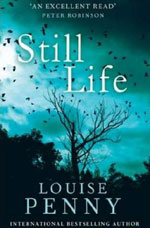
Louise Penny: Still Life

This is the first book in a mystery series set in Quebec and featuring Chief Inspector Armand Gamache, a very sympathetic crime investigator, and lots of other vivid characters I'd like to get to know better. Too bad that one of the most interesting characters is the one whose death Gamache is investigating here, so I'm pretty sure she won't make an appearance in the later parts of the series.

On the whole, this is a pretty enjoyable traditional detective novel. Not exactly "a cosy mystery" despite the people and setting, but not too gory or gloomy either. If you are wondering whether this series might be your cup of tea, go to Louise Penny's author website and read the excerpt - it's a good sample.  


Micha Boyett: Found. A Story of Questions, Grace & Everyday Prayer

A mother of a toddler feels she has lost the prayer life and the relationship with God she used to have. She looks for help and inspiration in the writings of St Benedict and the practices of Benedictine monks.

Reading this was a bit like going on a journey with Micha as she discovers grace, even and especially when she doesn't find simple clear-cut answers to her questions. I identify a lot with her tendency to try to earn the love and approval of God. And yet, that's not at all what life is about, and I think I'll go back to this book some day to remind myself of that.


Gary Wilkerson: David Wilkerson. The Cross, the Switchblade and the Man Who Believed.

A son writes his famous father's biography, and does it well. The book gives a complex portrait of David Wilkerson: both the victories and the struggles, weaknesses and strengths. Family, friends, and coworkers give their views. And what a story it all makes. This is no hagiography, but it's a testimony of what God has done.


William Zinsser: On Writing Well. The Classic Guide to Writing Nonfiction (30th anniversary edition)

Apparently Zinsser knows what he is doing as a writer, because I really enjoy reading this writing guide. Essential reading for people who want to write nonfiction.


Tuesday, 3 March 2015

New on the Stack in February

Linking up with the Deliberate Reader for a look at our new additions.

So this is what happens when most of my library requests become available at the same time. I become so busy reading that I don't have time for blogging about books.
That pretty much sums up my February.


Temple, Rob: Very British Problems. Making Life Awkward for Ourselves, One Rainy Day at a Time.

Why: Saw it on the list of new titles at the library and thought it sounded interesting. What I didn't realize was that this is practically a collection of tweets. Not bad, though. Good for those "I want something to read that I can put down quickly" moments.

Louise Penny: Still Life

Why: I've read good reviews of this detective series and thought I'd give it a try. The Quebec setting was an extra incentive, as I haven't read too many books set in Quebec. (Actually, can't think of any off the top of my head.)

Anne Lamott: Bird by Bird

Why: Many positive reviews from people who love to write.
(However, as I wrote in my challenge update post, I'm not raving about this, though it was good. It's just that I'm not an aspiring writer of fiction.)

Marilynne Robinson: Housekeeping

Why: After Gilead, Home and Lila, I wanted to read Robinson's first novel, too.
My thoughts at this point (40 pages in):
- I know Robinson didn't read Lamott's Bird by Bird before writing this, but somehow the characters seem to be written in the way Lamott suggests to write them.
- I can sort of understand why many people have loved this, but I'm not fully convinced yet.
- If this had been the first book by Marilynne Robinson I read, would I have given Gilead a chance?

Alexander McCall Smith: Emma

Why: Because I am a Jane Austen fan, I've enjoyed other books by Alexander McCall Smith, and this fit nicely with the HelMet reading challenge.
(But really, why do I read modernizations of Austen's works, when I love the originals so much that nothing will ever compare? :) )

Heilika Pikkov: Minu Jeruusalemm (My Jerusalem)

Why: I've liked many other titles in this Estonian series. They're all written by people who live or have lived as expats in the country/city they write about, and the point is to give a personal perspective - their own experiences, not a tourist guide.

This writer is a young woman who lived in a convent in East Jerusalem to make a documentary film about one of the nuns. Sounded interesting to me - Jerusalem is a fascinating place, and I don't mind getting a glimpse of how documentaries are made.
(I read Estonian fairly fluently, though I probably miss a lot of nuances. One reason for me to read this series is to keep up my Estonian.)


And my only Kindle purchase was:

Katherine Reay: Lizzy and Jane

Why: It was a special offer ($0,99) and commended on Modern Mrs Darcy, so I thought I'd snap it up. See McCall Smith's Emma for other reasons... I might save this one for the summer, though.


Thursday, 26 February 2015

Reading Challenge update, February

For Modern Mrs Darcy's reading challenge, I have not just one but two books that were originally written in a different language. I've read both of these in Finnish - the original language of Quo Vadis was Polish, which I don't know at all. As for Archbishop Desmond Tutu's book, this one was only available in our library system as a translation, either Finnish or Swedish, and I chose my mother tongue... :)

Then the HelMet challenge. I'm still at the easy stage where practically all the books I've read have fit into at least one new category. I've also had more time for reading than in January.

Henryk Sienkiewicz: Quo Vadis
2. A book that has been made into a film
38. A book you have started but left unfinished

This book has sat on my shelf for two decades. I have started it at least twice before, but I never got past page 100. This challenge was the nudge I needed to take it up again, and this time I did finish it, too.

This time around, too, it was hard going at points. Probably for the same reasons why I had dropped it before. I found it hard to feel sympathy for the main characters. The heroine, Lygia, seemed to me just an idealized, extremely beautiful, superbly virtuous and innocent girl. The male main character, Vinitius, was well depicted, but mostly a hot-tempered, selfish oaf before his conversion. The writing style is elaborate, very "romantic." And the cruelty and brutality of ancient Rome are described with a little too much effective detail for my tastes.

And yet - I can see why it's a classic and why it has been so popular. This has as much drama and romance as a reader of historical fiction could ever wish for. It's also a vivid picture of the life and martyrdom of early Christians in Rome. (With, perhaps, a little too much idealization?) It's so chock-full of cinematographic scenes that I wouldn't be surprised if someone in Hollywood decided to do a new version or even a TV series; the 1951 film was apparently quite a success.

Archbishop Desmond Tutu: Anteeksiantaminen - tie tulevaisuuteen (No Future Without Forgiveness)
33. Author is not from Europe or North America

A hard read, a good read.
Archbishop Desmond Tutu's memoirs deal mostly with his experiences heading the Truth and Reconciliation Commission, which was set up to try to deal with the national traumas and the multitude of crimes against humanity committed during the apartheid period in South Africa.

In addition to Tutu's personal experiences of discrimination, the book has plenty of details of those crimes against humanity, i.e. acts of violence, as quotations from the testimonies heard by the Commission. Those were the hard parts to read. But, after all, there is also the perspective of hope: the real changes that have happened in South Africa, the reconciliations, the apologies, the forgiveness. Amazing things can happen when someone chooses humility and truth. "The truth hurts but silence kills," said the Commission's posters.

Rissanen, Roy and Sirpa: Lento jurttien yli (Flight over yurts)

8. The events of the book happen somewhere other than Finland

Finnish missionary family moves to Mongolia to work for MAF, trying to get the work started and (also literally) off the ground. Culture, language and bureaucracy: lots of new experiences.


Lamott, Anne: Bird by Bird. Some Instructions on Writing and Life
1. Written by an author whose work you have not read before

I can't say I loved this, though I liked it. She is "real" and puts things bluntly, which is not a bad thing. It's a good insight into what it's like to be a writer, and it's interesting for a reader to get to see the process from an author's perspective.

I might have got more out of the book if I was really an aspiring writer, but I'm not. I am not bursting with something to tell the whole world. I just love books, and playing and working with words. And as a translator, the point is not to find "your own voice" - the point is to convey the original writer's voice. But the advice to just get on with the first draft, even if it's bad, is good for a translator too.


Prior, Karen Swallow: Fierce Convictions. The Extraordinary Life of Hannah More - Poet, Reformer, Abolitionist
22. A memoir or a biography

A biography of a woman who certainly found her voice and used it. I've written more here.


McCall Smith, Alexander: Emma
17. A retelling of a classic story

Jane Austen's Emma in modern times.
Emma's plotlines and characters work very well in a modern setting, though it took Smith quite a big part of the book to establish them there: how did Mr Woodhouse become who he is, how did Miss Taylor come to the household, what was Emma's childhood like... But I didn't really mind Mr Woodhouse and Miss Taylor getting a bigger part of the narrative, as I liked Smith's take on them.

However, Mr Knightley was a bit of a cardboard character. He just didn't get enough time and action in the story. And Emma's self-satisfied bossiness was just as annoying as in the original.


Paris was ours: thirty-two writers reflect on the city of light (edited by Penelope Rowlands)
24. Set in a place you have always wanted to visit

As with any collection of writings by multiple authors, I loved some and didn't much care for some others. All the writers included in the collection have moved to Paris, for one reason or another. Some still live there, some don't. Very varied perspectives. Recommended for francophiles.