Saturday, 15 October 2016

October Quicklit: Memoirs

Joining the link-up at Modern Mrs Darcy to share quick reviews of recent reads.

I haven't been writing about books here for a long time, let alone participated in link-ups. I have quite a pile of books I've read in the meanwhile, and I'm not even going to attempt putting them all into a blog post.

So, what we get here today is a collection of memoirs I've read in the recent months. As biographies and memoirs are among my favourite genres, it's not surprising I've read a lot of them lately.

First, some World War 2 stories:


Harrell, Edgar: Out of the Depths

The subtitle basically says it all: 
An unforgettable WW2 story of survival, courage, and the sinking of the USS Indianapolis.
Edgar Harrell, with other survivors of the USS Indianapolis, was stranded in the Pacific Ocean for five days after the ship sank. This is Harrell's story, and also a tribute to God who sustained him and saved him through the ordeal (and to the others from the ship - both those who survived and those who didn't). 
Author's website: http://www.indysurvivor.com/


Out of the depths have I cried unto thee, O Lord.
Lord, hear my voice:
let thine ears be attentive to the voice of my supplications.
Psalm 130:1-2 (KJV)


Anita Dittman: Trapped in Hitler's Hell: A Young Jewish Girl Discovers the Messiah's Faithfulness in the Midst of the Holocaust

This story is so amazing that it's hard to describe it. Anita's mother was Jewish, but her father was (Aryan) German, and he left his family when these kinds of "mixed marriages" were attacked under the Nazi rule in Germany. Anita and her mother had become believers in Jesus already before the war, and they had little but their faith and their Saviour to rely on, as their lives became increasingly difficult.
(It's probably not a spoiler to say that Anita survived the war. :) )

Author's webpage: http://www.hitlershell.com/

Leon Leyson: The Boy on the Wooden Box

Leon Leyson was one of the youngest workers on the famous Schindler's list, and this is his memoir. The book appears to be geared towards young readers (perhaps from 11 years up?), because I found it in the children's history section at our library, but it's a good read for anyone interested in this period of history.

Leyson begins with his memories of his early childhood in a Polish village and in Krakow, where the family moved before the war, when the father got a factory job there. Leon turned ten around the time Germany occupied Poland, and so his memories give a child's perspective on the war and the worsening persecution of Jews. It is clear that if Leon's father (and other family members, including Leon himself) had not been hired by Oskar Schindler, the chances of the family's survival would have been extremely slim.


Then moving from World War 2 to other periods....


Ravi Zacharias: Walking from East to West: God in the Shadows

Ravi Zacharias is a famous Christian apologist, though I have to admit his name wasn't really familiar to me. 
However, I really enjoyed this memoir I bought when it was on sale for Kindle. Perhaps my favourite part was Zacharias's description of his childhood and teenage days in India, both before his coming to faith in Jesus and after. Colourful, vivid stories of escapades with friends, problems at school, disagreements with his father, desperation, suicide attempt, and then the change in his life when Jesus became his Lord and Saviour, and the active and dynamic faith life in India with his Christian friends. The rest was interesting, too (his moving to Canada, studies, marriage, God leading him into ministry, etc.), and I'm planning to read more of his writings (apologetics) at some point.


Carolyn Weber: Surprised by Oxford: A Memoir

A young Canadian student gets a scholarship to study a year at Oxford, England. There, she goes on a spiritual journey that leads her into Christianity.
I loved many things about the book. Carolyn's student life, the people she meets and the friendship, the conversations, just simply the setting of Oxford with all its unique characteristics and traditions. I cannot read too many books set in Oxford. I love the idea of Oxford, and yes I love the actual place, too, though sadly I've only been able to visit as a tourist. Getting to experience it through a book is some consolation when not able to go there in real life.


Helen Russell: The Year of Living Danishly

When Helen Russell's husband gets the job offer of his dreams at Lego Company(!), Helen agrees to move to Denmark for a year. One of the things she finds out about Denmark in advance is that it is often ranked as the happiest country in the world. This gives Helen, a journalist, an idea for a research project for her Danish year: why, exactly, are the Danes so happy, and what can she learn from them and apply to her own life?
I like reading memoirs about moving to a different country, and here the personal story is combined with "happiness research" and interviews with specialists in different areas of life. This combination works very well. Yes, Danes are happy for a lot of reasons, and yet Russell does not gloss away the hard and not-so-happy parts of Danish life, either.
The premise was somewhat reminiscent of Gretchen Rubin's The Happiness Project, but I found Russell's story easier to relate to - and maybe funnier, too, with all the additional elements of navigating a new culture. Russell is British, and Denmark is not very far from Finland, both geographically and culturally. (Though I'm sure I'd have my share of culture shocks if I were to live in Denmark - there are plenty of differences, too.)
Author's webpage: http://www.helenrussell.co.uk/

Monday, 11 July 2016

That's Not English

Erin Moore: That's Not English. Britishisms, Americanisms and what our English says about us

To put it in British terms, this book is not bad at all.
If I say it's quite good, I mean it the American way.
If this confuses you, just read the book. :)

This is recommended - might even say required - reading for everyone who loves the English language and comes into contact with both British and American usage.

It's especially useful for someone like me. I'm not a native speaker of any variety of English and thus I often find it hard to get all the nuances and subtle differences. With all my experiences of cross-cultural communication, there are still more pitfalls for me to discover... I'm so thankful that I can read books like this and learn about at least some of them without having to embarrass myself.

When reading this book, I realized that I tend to use certain expressions in the American sense and others in the British sense, unaware that they're different in the other.  A good example is the first chapter: "Quite", with this subtitle: In which we find out why Americans really like quite and the British only quite like really.

This book is both informative and humorous. Moore doesn't just discuss the differences in vocabulary and grammar, she also explores cultural differences. An American Anglophile, married to a British-American family and living in the UK, she has a pretty good grasp on both cultures and also the culture shocks that one enounters when moving from one to the other - despite speaking the 'same' language.

I put this book on my To Be Re-Read list immediately after finishing it.

Wednesday, 8 June 2016

Not just five conversations...

I have been writing down my thoughts on books I've read but not getting around to putting them on the blog. I'll try to get round to posting about other books later - but here's the first.

Vicki Courtney: 5 Conversations You Must Have with Your Son

I think a more accurate title would be "five conversation topics" - we are not talking about five big talks, but rather five issues that need to be discussed. Talking about these issues takes some deliberate effort, too - sometimes, the conversations begin or turn to these questions naturally, but sometimes you need to be aware enough to seize the moment.

I tend to agree with Vicki Courtney on most of the essentials she talks about in this book. I'm paraphrasing the conversation headers here - and rather than write a book review, I'm writing about what the book made me think.

Conversation one: Don't let popular culture define manhood for you.

Courtney seems worried that current American culture makes men look/feel/act too wimpy (and there's a backlash of machoism coming up). In Finland, too, many comedies get laughs on the stereotype of "stupid men" as if men are only to be expected to act immaturely. Yet, I don't think that is the only image of manhood that the culture is offering - there are a lot of stereotypes around, for both men and women.

So, I agree that we should talk with our boys about the ideas we got from books, films, people's comments and attitudes, etc. Sometimes it even may be a healthy influence, a good role model considering the talents, interests and personalities of our boys - and let's talk about that too.

Conversation two: What you don't learn to master will eventually master you.

Self-control. Oh yes. As Courtney points out, the key to real efficient "self-control" is knowing God and asking for His help in this area. Being able to "stop, think and pray" when faced with a temptation is a good life skill for anyone. 
 
This section also has lots of sobering - well, frankly, frightening - statistics about pornography. Which takes us to the next section...

Conversation three: Get the sex facts straight.

Courtney advocates straight talking, starting early and having many conversations along the way. Yes, I agree. It's important that home is a safe place to talk about these issues, that we parents overcome our own hangups about discussing the subject, and that we make sure the kids get the facts from us first.

Easier said than done, though. My 11-year-old son is not terribly keen to discuss puberty, let alone sex, with us parents, and I don't want to force him - but I want to keep the conversation line open. I want him to know that it's OK to come to us with any questions - especially if he sees or hears or reads something that confuses him.

Conversation four: Do become an adult.

"Failure to launch" is a real issue in our Western culture today. I think in Finland it's always been an issue for some - and yet, the normal process is for young people to move away from home by the time they're in college/university. A huge drive for independence can be a good thing - or not so good. It's healthy to become a responsible adult, to start making your own decisions, handling your finances, etc. But is the young person actually desiring to be responsible or just craving freedom from the parents' control? We parents, too, need to learn how to let go in a good way.

Conversation five: Dare to be a godly man.

I think at the end of the book Courtney nails it. We are not aiming to make our sons into just nice young men with nice behaviour and nice manners - it's not the outside that counts as much as what is in their hearts. If I see my son, in ten years time, a follower of Jesus, that'll be the result I hoped for. He may make mistakes. Well, let's be realistic, he will make mistakes of some kind. The measure of a man is what he does with his mistakes. Will he repent and deal with the consequences? Will I do that when I make mistakes?

Only by the grace of God.
Whatever I discuss with my son, I can't (and mustn't try to) make his choices for him. He needs to choose Jesus himself. 

Thursday, 3 March 2016

So much to read (and so little time)


Around the end of December, I got into a reading/writing slump. I've managed to read a few books since January, but I haven't had the time and energy to write about them.
I'm beginning to recover, though. At least I'm getting back into reading, as evidenced by this huge (for me) pile of books I've added to my TBR stack within the last month.

Library books:
W.G. Sebald: Saturnuksen renkaat

Originally written in German (Die Ringe des Saturn: Eine englische Wallfahrt) and published in English as The Rings of Saturn. I didn't know anything about this book but saw the keywords 'Britain,' 'walking,' and 'travel,' and so borrowed this on a whim. Looks like it's more literary/highbrow than the travel books I typically read, but I'll see how I like it when I get to it.

Daniel Coyle: The Talent Code

A re-read, because I want to remind myself of the principles of deep practice.

John Gottman: Sju gyllene regler för en lycklig kärleksrelation

This is The Seven Principles for Making Marriage Work in Swedish, because my library only had this version of it. I'm interested in getting the information and the principles from this book, but it's rather heavy going in Swedish. I can read Swedish almost fluently, but one part of my brain is trying to re-translate the text into English or at least guess what the original says, while another part is trying to process the information into my mother tongue so that I could apply it to my life and marriage. And I constantly feel like I'm missing something...
Should I persevere with this or switch to the same author's 10 Lessons to Transform Your Marriage, which is available in the library as a Finnish translation?

Timothy Keller: Kuninkaan risti

Finnish translation of King's Cross. I got this because I really liked The Prodigal God by the same author; it was one of the few books I managed to read during my January reading slump.

Christopher McDougall: Natural born heroes: the lost secrets of strength and endurance
* ebook borrowed from the library

I rather enjoyed McDougall's Born to Run, even if I didn't buy into it wholesale. (I don't eat chia seeds daily and I definitely don't run ultra distances...) That's why I picked this ebook when it happened to be available in the library system and I was looking for something to read.

I'm only about halfway through so far, so I'm not giving a final verdict yet, but I'll say it's not as easy to get into as Born to Run. It seems a mishmash of WW2 history and ancient history (in Crete/Greece), human potential for endurance and heroism, plus a bunch of other stories, and I'm still looking for the thread that will bind everything together.

Kindle purchases:

I also went a little bit crazy with Kindle daily/monthly deals (all of these books were between $1 and $5 when I bought them). I'm certainly not going read all these in March, but some day...

Vicki Courtney: 5 Conversations You Must Have with Your Son

I have a son who'll be turning 11 soon. I have a fairly good idea of what I want to discuss with him as he's growing up, but this book looks like a good reminder of certain essentials.


Doris Pilkington: Follow the Rabbit-Proof Fence

Sounds like an interesting story.

Anita Dittman: Trapped in Hitler's Hell: A Young Jewish Girl Discovers the Messiah's Faithfulness in the Midst of the Holocaust

Another story that sounds interesting :)


Michael P. V. Barrett: Beginning at Moses: A Guide to Finding Christ in the Old Testament

I want to find out more about this topic.


Helen Bryan: The War Brides

Some fiction for a change - having read a bit of the sample, I wanted to read more.


Carolyn Weber: Surprised by Oxford: A Memoir

Spiritual discovery and Oxford. With those keywords, this ought to be my cup of tea :)


Tuesday, 15 December 2015

Recent Reads (October-November-December)

Linking up with Modern Mrs Darcy's QuickLit - short reviews of books we've read lately.

It's been a couple of months since I last wrote anything on the blog. With respiratory illnesses to overcome, a couple of birthday parties (not mine) to organise, a running race ro crew in, and all kinds of other activities, I've had some time for reading but little time and energy to write.

Kayla Aimee: Anchored - Finding Hope in the Unexpected

This is a memoir by a mom who gives birth to a preemie daughter (at 24 weeks). I love to read real life stories, and this one had me both laughing and crying. Faith tested, faith changed, challenges faced, all recounted with humour and honesty.
(But if you are pregnant right now, and already dealing with fears and mood swings, you might save this for later.)

Marie Kondo: The Life-Changing Magic of Tidying

So now I've read it. Goes for the reading challenge category of the book everyone has read but you...  And though I can see why it's been so popular, I don't have much to say about it, I haven't "KonMaried" my belongings, and I'm not likely to in the near future. Good basic principles of deciding what to keep (rather than focus on what to discard), though. 

Gaston Dorren: Lingo: A Language Spotter's Guide To Europe

Fun reading for language geeks.
You definitely don't need to be a linguist to enjoy these histories and peculiarities of various European languages.


Brennan Manning: All Is Grace (A Ragamuffin Memoir)

The bottom line of Manning's message is God's unconditional grace and love, and that's also illustatred by his colourful life and this memoir that certainly does not try to hide his weaknesses and faults. Moving and touching.

Kate Hannigan: The Detective's Assistant

Historical fiction for aimed mainly for young readers. A young, plucky orphan girl goes to live with her aunt in 1800's Chicago. The aunt's character is based on a real person: Kate Warne, the first female detective in the USA. The Aunt is busy with her important and sometimes pretty dangerous work and she is not at all happy to have her niece thrust upon her, but young Nell eventually becomes quite an assistant, as the title implies.
I chose this for the reading challenge category of "book you read because of its cover" - the cover really caught my eye on the "New Titles" shelf of our library's children's department - but I ended up being delighted with the story, too.

Saturday, 17 October 2015

Recent Good Reads, October

I was suprised how many good books I've read since the previous Quick Lit.

Linking up with Modern Mrs Darcy - the monthly link-up for short reviews.

Caroline Moorehead: Village of Secrets. Defying the Nazis in Vichy France

Moorehead has written a thoroughly researched and apparently fairly balanced account of what happened on the plateau Vivarais-Lignon during World War II. It's a remarkable story - many outstanding individuals but also just many 'unnamed', quiet people in the background, all working more or less together to save and protect Jews.

This is an intensive read. Not just the subject matter - it's also hard to keep up with all the people and the parallel storylines in the book. Lessons on the power of faith and the power of a community acting together are on offer. And a lot to ponder: "What would I do if facing choices like this?" (Just the thought of having to send my 10-year-old away to be cared for by strangers, because that was the only way to save his life... shudder.)

Apparently, many people who only want to see a part of the story haven't liked the way Moorehead presents various, even conflicting viewpoints. Here's a piece by the author about it.


Chris Hadfield: An Astronaut's Guide to Life on Earth

Col. Chris Hadfield was the first Canadian astronaut to walk in space and command the International Space Station. But those are just a couple of highlights, and most of his life has been on Earth. In this memoir, Hadfield is also trying to explain what it takes to become an astronaut (a lot) and how to think like an astronaut. 

I really enjoyed this and would recommend this without hesitation to anyone who has even the slightest interest in space exploration. Or to teens who are trying to sort out possible career choices (even if their dreams have nothing to do with space exploration), because most of the principles in Hadfield's "thinking like an astronaut" are very applicable to life on Earth, whatever you do. 

Hanspeter Nüesch: Ruth and Billy Graham: The Legacy of a Couple

This is not a biography as such - the book is organised around topics, not chronologically. There are plenty of anecdotes, photos and quotes; Nüesch has done a thorough job of interviewing people and going through books, newspaper and magazine articles, Billy's and Ruth's speeches and writings, etc.

If you want to know what Ruth and Billy Graham thought about various issues, how they came to think the way they did, and how their principles and convictions played out in practice, this is a good book to read. I enjoyed getting some insight into how the Grahams' marriage and family life worked.

I also felt that the book was not trying to put its subjects on a pedestal. Just the opposite: the emphasis was on God's grace and mercy, which the Grahams knew they themselves needed every day, all the time. And that made this book even more inspirational. Glory to God, not to the people.


Gretchen Rubin: Better Than Before - Mastering the Habits of Our Everyday Lives

I wasn't quite as impressed with this book as I expected to be. Maybe it's just the timing - I'm not feeling particularly keen to analyse and improve my everyday habits, even though I realize there's room for improvement.

The positives: I like Rubin's style of writing, very readable, and it's nice that she keeps giving personal examples from her own life and the lives of people around her.

In the end, though, I'm left with the hard work of thinking how this all could be applied to my real life, and right now, it's easier to close the book, return it to the library and leave it at that. Maybe I'll put this down on the list of "books to read when I feel energetic enough to actually apply them"?


Diana Webster: Finland Forevermore. Helsinki 1953-1963.

This is a memoir of Diana Webster's first decade teaching at the English Department of Helsinki University. More than the university, though, it's about life in Finland at the time, as experienced by an expatriate Brit. She also tells how she started working on radio and television productions alongside her teaching career.

I found this both very interesting and also very funny. Oh how much life has changed in the decades after this period, both at the university and in the Finnish society overall.

Of course for me there's the personal angle of remembering Mrs Webster fondly from my university days (she was still teaching there in the early 1990's) but I'm sure that other readers will appreciate this memoir, too, even if they've never heard about her or met her. I can also recommend her memoir of her first year in Finland, Finland Forever, as well as the book she wrote with her daughter Victoria, called So Many Everests.


A collection of 13 short stories by 13 different authors. All stories are about strong girls or women and real historical events. The website says this was "intended for readers of 9+ years."

It was OK; I liked some stories much better than some others but mostly enjoyed them all.

A side note, if you're thinking of giving this to a young reader: In many stories, people die. Even sympathetic characters. That's real history, of course, but still, I don't know how well I would have handled that as a sensitive 9-year-old (for me, this would have been much better at 12+). Just be aware; you'll know your young reader best.

Sunday, 4 October 2015

New on the Stack from September


Library stack:

Hanspeter Nüesch: Ruth and Billy Graham: The Legacy of a Couple

Why: Found this on our library's list of new acquisitions as a Finnish translation and clicked myself into the queue for it immediately. I've read Billy Graham's autobiography many years ago, but not so much about Ruth Graham. 

NB: This is not really a traditional (chronological) biography; the book explores what Ruth and Billy Graham thought and believed about various topics, how they put their convictions into practice and what their legacy and influence has been. Sounded very interesting to me.


Chris Hadfield: An Astronaut's Guide to Life on Earth

Why: No idea how this ended up on my TBR list, but I'm glad it did. It's mostly a memoir, and also a guide to thinking like a good astronaut. ("Sweat the small stuff." "Aim to be a zero." "What's the next thing that could kill me?")


Daughters of Time (An Anthology from the History Girls

Why: I needed a book of short stories for the HELMET reading challenge. This was one of the most interesting that came up in my library database search: 13 stories, historical fiction about girls/women based on real events, and all written by different authors.


Other additions:

Laura Hillenbrand: Unbroken

This one moved into my stack now that my husband has read it. It just has to wait until I get the library books out of the way...

Wednesday, 16 September 2015

September QuickLit - some recent reads


Päivi Laitinen: Pieni pyörä preerialla (A Little Bike on the Prairie)

For those readers who aren't fluent in Finnish: I'm so sorry this book is not likely to become available in English. :)

At the time Päivi Laitinen cycled across the USA on the TransAmerica Trail route by Adventure Cycling Association, she was a 48-year-old journalist taking a leave of absence from a Finnish small-town newspaper. Even though the book looks a bit "self-published" visually, the text shows that she's a professional writer. She gives the essential flavours of the places she visits, some local background history/stories, some significant details, and it's like you'd seen it yourself. (And she also has the professional writer's knack for leaving things out so that reader doesn't get too tired.) Such a fun book.

And as she cycled the flat straight roads of Kansas, she had plenty of time to think how to put her experience into one sentence. And this is what she came up with (my translation): "USA is a big and hot place with horses, nice people - and all too many hills!"


Joseph Loconte: A Hobbit, a Wardrobe and a Great War. How J.R.R. Tolkien and C.S. Lewis rediscovered faith, friendship, and heroism in the cataclysm of 1914-1918


Mostly, I picked the book based on the cover and the title. And those made me want to learn more about how J.R.R. Tolkien's and C.S. Lewis's experiences of WW1 influenced their views and writing. However, I was a little disappointed, feeling that I didn't learn much new. (If you have read quite a bit about WW1 and if you have read Tolkien's and/or Lewis's biographies, be forewarned.) I'm not saying it's not a good read, but maybe I'm not enough of a Tolkien/Lewis fan to 'love' this book.

So, Tolkien kept his Christian faith despite the war making many of his generation more cynical. C.S. Lewis actually became a Christian much later, and you can't say the war made him lose his faith nor to rediscover it. What they "gained" from the war was knowing the kind of fellowship that develops between people who fight together, and those deep friendships are a big part of their stories. The author also points out that they didn't lose the hope that there are things worth fighting for, though war and fighting is not glorified in their fiction. The gritty and gruesome realities of war are more subdued and hinted at in Lewis's Narnia (after all it's written for children) and more horribly realistic in Tolkien's Lord of the Rings. Their heroes don't enjoy fighting, but they get on with what has to be done.


Joni Eareckson Tada: A Place of Healing: Wrestling with the Mysteries of Suffering, Pain, and God's Sovereignty

I haven't quite finished this one yet, as I'm savouring it slowly. If anyone, Joni Eareckson Tada is well qualified to write about this topic. It's not just the decades of quadriplegia, but also the more intense chronic pain that she has suffered (apparently this book was written before she had the breast cancer, too, because she doesn't mention it).

With all her personal experiences of suffering, she's definitely been asking lots of questions and also looking for answers in Scripture. None of her conclusions are drawn lightly or superficially. I love the way this book makes me think and points me towards God.

This is her conclusion about healing: God reserves the right to heal or not... as He sees fit.

Definitely, if you want to read a good book on the issues of suffering, faith etc., put this book on your reading list, now. :)

Thursday, 10 September 2015

New on the Stack - August additions

August and September have been busy months. Work, school, everything gets going again after the summer breaks.

I got some new books to read, though. Linking up with Sheila at the Deliberate Reader - I'm sort of late for link-up but she gracefully keeps it open for us slow bloggers, too :)

Here are the library books:


Caroline Moorhead: Village of Secrets. Defying the Nazis in Vichy France

Why: Caught my eye among the new library books. World War II history.

Joseph Loconte: A Hobbit, a Wardrobe and a Great War

Why: Caught my eye... was hoping to get new perspectives on J.R.R. Tolkien and C.S. Lewis, considering how influential their books have been.

Griff Rhys Jones: To the Baltic with Bob

Why: Having read Rhys Jones's book on British rivers, I thought I'd give this older travel book a go.


Päivi Laitinen: Pieni pyörä preerialla (A Little Bike on the Prairie)

Why: Cycling across the USA? Sounds interesting! This Finnish woman cycled the TransAmerica Trail cycling route by Adventure Cycling Association - i.e. from Virginia to Oregon. What a journey. I like the way she writes about the places, the people she met, and her own feelings and experiences on the route.
While cycling, she pondered how to put her experience into one sentence, and this is what she came up with: "USA is a big and hot place with horses and nice people - and all too many hills!"

Kindle Purchases 


I was paying attention to special offers and bought three books:

Ed Cyzewski: Pray, Write, Grow: Cultivating Prayer and Writing Together

Why: Recommended by Anne at Modern Mrs Darcy.

Lysa Terkeurst: The Best Yes: Making Wise Decisions in the Midst of Endless Demands

Why: I've read positive reviews and heard a couple of interviews with the author - interested enough to give it a go at $1,99...

Sara Korhnak & Beth Anne Schwamberger: Time Management Mama: Making Use of the Margins to Pursue your Passions

Why: This was offered free of charge, and the topic is spot on for my life right now - it wasn't a difficult decision to get it and see if there are some good ideas I could use.

Friday, 21 August 2015

A "Self-Portrait" in Books

My birthday was this week, and to celebrate it, here are 45 books I have loved during the past 45 years.

Because I'm limiting this list to books that are available in English, I've had to leave out a lot of my Finnish favourites, and so the "self-portrait" is not quite accurate. But it's a fair glimpse into my reading history and what sort of books appeal to me.

An another caveat: I didn't include the Holy Bible in this list. It's the book I read the most, but it's really in a category of its own.

Ten favourites from my childhood 

 A.A. Milne: Winnie-the-Pooh

Elisabeth Beresford: The Wombles

Kenneth Grahame: Wind in the Willows

Eleanor Estes: The Moffats

Astrid Lindgren: Vi På Saltkråkan (Seacrow Island)

Enid Blyton: the Adventure series

Laura Ingalls Wilder: Little House in the Big Woods (and the series)

L.M.Montgomery: Rilla of Ingleside

L.M. Alcott: An Old-Fashioned Girl
James Aldridge: The Marvellous Mongolian

The last one gets to represent my horse phase. Most of the horse books I devoured were by Finnish or Swedish authors, probably not available in English.

From teen years and early twenties

Mary Stolz: By the Highway Home

John Steinbeck: Travels with Charley

J.R.R. Tolkien: Lord of the Rings

Douglas Adams: The Hitch-Hikers Guide to the Galaxy

Fynn: Mister God, This is Anna

It was difficult to think back to those years. I know I read a lot, but what did I enjoy the most? I must have forgotten many good books, but if I remember a book as a significant reading experience about thirty years later, it must have been important.

Jane Austen - and other fiction favourites from the last two decades

Jane Austen: Persuasion

Jane Austen: Pride and Prejudice

Jane Austen: Mansfield Park

Jane Austen: Northanger Abbey

Jane Austen: Sense and Sensibility

Jane Austen: Emma

Elizabeth Gaskell: Cranford

Barbara Pym: Excellent Women

Josephine Tey: The Daughter of Time

Dorothy L. Sayers: Gaudy Night

C.S. Lewis: The Screwtape Letters

Adrian Plass: The Sacred Diary of of Adrian Plass Aged 37 3/4 (and the entire series)

Adrian Plass: Stress Family Robinson (and its sequel, The Birthday Party)

Jeff Lucas: Helen Sloane's Diary (and its sequel, Up Close and Personal)
Robinson, Marilynne: Gilead


For all other authors, just one favourite book (or series) has to represent them. But Jane Austen and Adrian Plass are special.

A bunch of biographies and other Christian non-fiction

Sheldon Vanauken: A Severe Mercy

Joni Eareckson: Joni

Corrie ten Boom: The Hiding Place

Norman Grubb: Rees Howells: Intercessor

Brother Andrew: God's Smuggler

Elisabeth Elliot: Through Gates of Splendour

J. Gunnar Olson: Business Unlimited

Nick Vujicic: Life without Limits

Eric Metaxas: Bonhoeffer: Pastor, Martyt, Prophet, Spy

Karen Swallow Prior: Fierce Convictions

C.S. Lewis: Mere Christianity

John White: The Fight

Loren Cunningham: Making Jesus Lord

Jennifer Saake: Hannah's Hope

Tim Kimmel: Grace-Based Parenting

The last category was a hard one to select and limit. I've read so much. I tried to pick those books that meant a lot to me at the time I read them and that have stayed with me a long time after I read them; the ones I'd recommend and buy as presents to others etc. But I could have added many others, too. (And again it's not the full picture, because many influential books have been by authors whose works have not been translated into English.)

Sunday, 16 August 2015

Selected summer reading (August QuickLit)

Linking up with Modern Mrs Darcy to share our recent reads.


Jacqueline Woodson: Brown Girl Dreaming

Life story in poems. Jacqueline Woodson writes about her family, about living as a child in South Carolina and then in New York, about being different (not just racial issues but also being raised as a Jehovah's Witness), and about finding her voice as a storyteller and writer.

So good to see the world from someone else's point of view.

Here's a little quote from one poem. It's about her finding a picture book at the library, "the picture book filled with brown people, more brown people than I'd ever seen in a book before."

If someone had taken
that book out of my hand
said, You're too old for this
maybe
I'd never have believed
that someone who looked like me
could be in the pages of the book
that someone who looked like me
had a story.


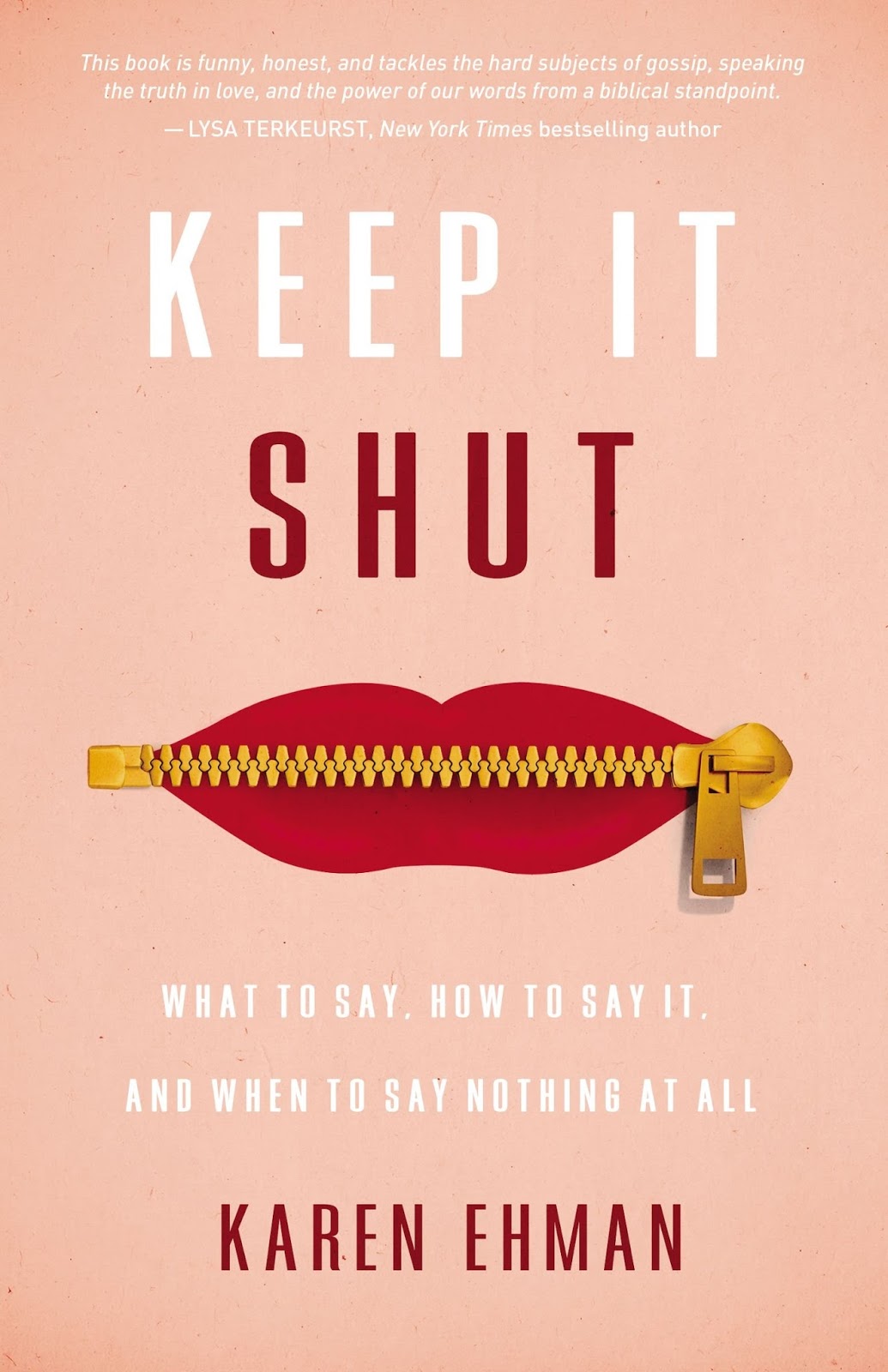
Karen Ehman: Keep It Shut: What to Say, How to Say It, and When to Say Nothing at All

A sensible, balanced look at using our words wisely. Many of the points and principles weren't exactly new to me, but served as a good reminder nevertheless. I also appreciated that Ehman's primary focus is not the mouth but the heart - examining the motives why we speak or don't speak - and that she writes candidly about her own struggles.


Jon Ronson: So You've Been Publicly Shamed

Ronson researches various kinds of public shame and humiliation and the way people have survived it - if they have survived it. He starts with a couple of cases where people have been humiliated on the social media. Since I don't use Twitter or Facebook (and don't live in North America), I had no idea of how far this can go and how much or little is needed to spark it.

As a look into the darker sides of social media and our modern culture, this book is fascinating and not a little frightening.


Rob Lilwall: Walking Home from Mongolia: ten million steps through China, from the Gobi Desert to the South China Sea

Lilwall is a Brit but his home is now in Hong Kong. Thus, walking home from Mongolia means walking through China. Lots of arduous effort, plenty of comical moments, some serious thoughts and a good dose of self-deprecating British humour. 


Griff Rhys Jones: Rivers: a voyage into the heart of Britain

Griff Rhys Jones made a TV series about British rivers and wrote a book about the experience. Apparently, the point of the series was to explore the history and the present day of the rivers as well as to entertain the audience by putting Jones into all kinds of difficult, risky and potentially funny situations in various means of transportation. Jones writes with a wry sense of humour and if you want to learn about history and geography, you'll get that, too.


Monday, 3 August 2015

New on the Stack in July

June was all about reading the books I had been 'saving for later' earlier in the year, but in July I went to the other extreme...

Linking up with Sheila at the Deliberate Reader.

Travel books galore

I got a lot of travel books, all for pretty much the same reason: they looked interesting, and reading a good travel book is a bit like taking a trip yourself.

Christopher Somerville: The golden step: a walk through the heart of Crete

Somerville is a travel writer, but this time he went to Crete to travel for pleasure, not for work. (It was sort of a 50th birthday gift from his wife.) It is apparent that he knows the country pretty well from previous visits, but on this walking trip, he also finds places and experiences that are new to him.

Rob Lilwall: Walking Home from Mongolia: ten million steps through China, from the Gobi Desert to the South China Sea

I enjoyed Lilwall's earlier book (Cycling Home from Siberia). This sounded just as promising. I like his blend of British humour, funny adventures and heart-searching.

Walking through China is something I am not likely to attempt myself, ever - so I'm glad I can read about someone else taking on the adventure.


  Griff Rhys Jones: Rivers: a voyage into the heart of Britain

Griff Rhys Jones writes about making a TV series on British rivers. 
(I haven't seen the series, but the book makes it sound pretty interesting.)

A mixture of history, geography, adventures with various means of transportation etc., humour, personal reminiscences... And a dog named Cadbury. :) (A chocolate Labrador. Of course.)


Not just travel - expatriate experiences

All borrowed from the library.
Why: As with travel books, I find it interesting to learn more about other countries through someone's personal experiences.

 Mailis Hudilainen: Minu Peterburi
 Ede Schank Tamkivi: Minu California

Two books from the same series: Estonian expats write about their experiences in a particular place. These ones are about St Petersburg and California. (I've never been to California, and the last time I was in St Petersburg, it was still called Leningrad...)

 
Saara Ojanen: Mekongin mutkassa (Along the Mekong river)

A Finnish NGO worker's experiences in Cambodia, from the 1980's to the present days. I know very little about Cambodia, and hope to learn more from this book.

Other library finds


 Susan Cain: Quiet: the power of introverts in a world that can't stop talking

Why: I'm an introvert, and I was interested in this book after reading many recommendations. My thoughts on the book here.

Jacqueline Woodson: Brown Girl Dreaming

Why: This caught my eye in the new titles list at the library website, probably because I've read some very positive reviews on it. (Moreover, I was glad to find a poetry book for the reading challenges - this is "a genre I don't typically read.")


Kindle purchases
I snapped up a couple of special offers:

Rachel Friedman: The Good Girl's Guide to Getting Lost: A Memoir of Three Continents, Two Friends, and One Unexpected Adventure

Why: Sounded intriguing. (See other travel and expat books...)

Karen Ehman: Keep It Shut: What to Say, How to Say It, and When to Say Nothing at All

Why: I listened to an interview with Karen Ehman about choosing our words wisely on the Focus on the Family Daily podcast during our holiday trip. (Talk about good timing...) 
I know this is a topic I really need to think about more. 

Joni Eareckson Tada: A Place of Healing: Wrestling with the Mysteries of Suffering, Pain, and God's Sovereignty

Why: I'm sure that what Joni Eareckson Tada has to say on this topic is worth reading.

Sunday, 26 July 2015

Thoughts on Quiet

I've read some glowing reviews about Susan Cain's Quiet - it seems to be a book that many American introverts find liberating or empowering. Along the lines of "I didn't know it was OK to be the way I am but then I read this book."

For me, a Finnish introvert, this book is not so much an insight into my own personality but an eye-opener into American culture. As I was reading the book, I marvelled at the differences between my home country and the American culture. I have not had to 'fake' extroversion to the extent described by Cain, even if I have sometimes felt a pressure to be less shy (but shyness is not the same as introversion).

In Finland, introvert personality traits are seen as normal. Cain even mentions Finland as a "famously introverted nation." Perhaps the extroverts have felt more out of place here, and their behaviour has been viewed as more problematic at school and at some workplaces. (Actually, in a recent article in Helsingin Sanomat (link in Finnish only), the Finnish extroverts interviewed talk of those kinds of experiences.)

Cain contrasts the American extrovert culture to Asian cultures, represented by her Asian-American interviewees. She connects their respect for quietness and introversion to the high value they place on being a member of a community and maintaining harmony within the community. Conversely, the Extrovert Ideal seems to go hand in hand with Western individualism: "Westerners value boldness and verbal skill, traits that promote individuality."

But in Finland, this equation does not hold. We can be both fiercely independent and individualistic as well as introvert. Stereotypical Finns are loners who prefer to set up their homes in the wilderness, miles away from the next neighbour. We tend to love uncrowded places. Of course a lot of us have become city dwellers - and we can live in a community and value it and behave politely with one another - but wherever you live, it's normal to want solitude in order to recharge.

The traditional image of a powerful Finnish businessman is a quiet man who only speaks when he has something important to say. (As a side note: The Finnish Silent Strength has been traditionally more associated with men.) Slick talkers have been viewed with skepticism and suspicion. Of course, the gift of the gab is alright for people who want to entertain others, for example comedians or salespeople at their market stalls who are trying to attract more customers... But if you want to be taken seriously, speak less and be matter-of-fact: let your facts speak for themselves.

But along the traditional Silent Strength, the Culture of Personality and the Extrovert Ideal have slowly entered Finland, too. Partly through the American-made entertainment we have so eagerly consumed, partly through the globalization of business? More and more Finns find themselves trying to sell their products, ideas and services to American businesspeople, and then they realize that facts do not, after all, always speak for themselves. Something else is needed to succeed outside Finland.

Reading Cain's book made me wonder what will happen to the Finnish Silent Strength. From her description, it seemed to me that the Finnish traditional culture is/was not very different from what the American was before the Culture of Personality took over. And now, even here, the Culture of Personality is a growing trend. People are posting their vlogs on YouTube, participating in reality TV shows, hoping to become famous.

I can't imagine us changing as a nation so completely that we'd adopt the Extrovert Ideal to the extent that Cain depicts. Would it be possible for Finland to find some kind of golden mean? To be a culture where both introverts and extroverts can thrive, find themselves accepted and appreciated?

I hope so.